ARE MINING JOBS IN DEMAND?
Mining jobs are in demand, as the need for minerals continues rising while skilled workers to fill these openings are difficult to find. Metal ore mining jobs are expected to grow by 16.3% over the next 10 years, which is higher than the national workforce growth rate, which is projected to grow 7.66%.
While the mining industry continues to fluctuate depending on commercial needs, environmental factors, and political factors, jobs in mining continue to grow as mining companies struggle to hire workers.
WHAT IS A MINING JOB LIKE?
Mining jobs can vary significantly based on the type of mining, the location, and the specific role within the industry.
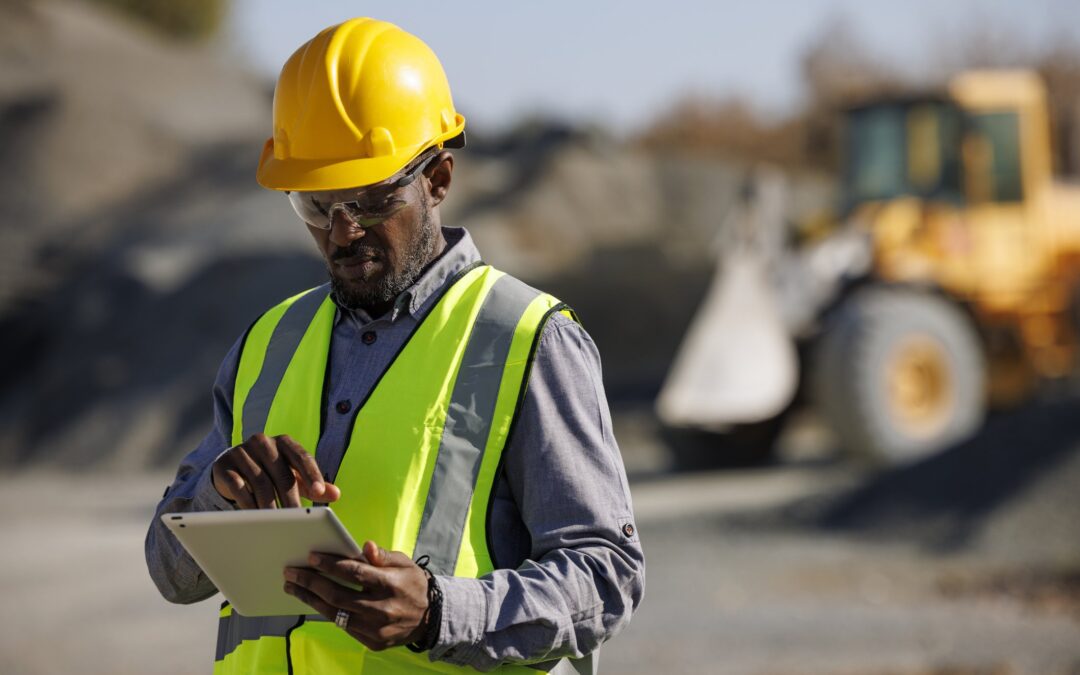
Mining jobs often involve working in challenging and sometimes hazardous conditions. Miners may work underground, in open-pit mines, or at remote mining sites. The work environment can be physically demanding, with exposure to extreme temperatures, dust, noise, and vibrations. Safety precautions are crucial, and miners are typically provided with safety gear and equipment.
Many mining jobs involve shift work, which may include long hours and work on weekends and holidays. This is often necessary to keep mining operations running continuously.
Depending on the location of the mining site, miners may need to travel to remote or rural areas. This could involve living in temporary camps or commuting long distances.
Many mining jobs are physically demanding. Miners may need to operate heavy machinery, lift heavy objects, and work in physically challenging environments.
DO MINERS NEED A DEGREE?
Many entry-level mining jobs, such as equipment operators, laborers, and some drilling positions, may not require a college degree. These roles often place a greater emphasis on relevant experience, on-the-job training, and the ability to operate machinery safely.
Some technical and specialized positions within the mining industry, such as geologists, mine engineers, and environmental specialists, typically require a relevant bachelor’s degree. For example, a geologist might need a degree in geology or a related field to effectively study mineral deposits and assess their quality.
HOW MUCH DO MINING JOBS PAY?
The average salary for mining depends on the industry and position you are employed in. Earlier-career mining positions typically receive an average salary of around $45,000-60,000, while some opportunities can be as high as $80,000-100,000, annually.
WHAT STATE PAYS MINERS THE MOST?
The highest-paying states for miners in the United States can vary based on factors such as the specific type of mining, location, experience, and demand for certain minerals or resources. The following states typically have great mining employment opportunities.
-
Alaska: Alaska has a significant mining industry, especially for precious metals like gold. Miners in Alaska can often earn higher wages due to the remote and challenging working conditions.
-
Nevada: Nevada is known for its gold and silver mining operations, which can provide well-paying jobs to miners.
-
South Dakota: South Dakota has a growing mining sector, particularly in gold and uranium mining.
IS IT HARD TO BECOME A MINER?
It depends on whether you are looking for an entry-level position or would like to become a high-level mining expert. It is typically easy to find an entry-level in the mining industry. Explore our job board to find open mining job opportunities. For higher-level work, many positions require a bachelor’s degree in a relevant subject as well as experience in the industry.
IS MINING A STRESSFUL JOB?
Mining can be a stressful job due to several factors, but the level of stress experienced can vary depending on the specific role within the mining industry and the conditions of the job.
Mining operations can be inherently hazardous. The constant need to be vigilant and follow strict safety procedures can create stress for some individuals. In addition, many mining jobs involve shift work, which can disrupt regular sleep patterns and have an impact on stress levels.
Many mining positions are contract positions, which can also be stressful for some individuals, as it requires lining up another contract job for when the current contract runs up. For more information on this, see how Rangefront focuses on providing long-term opportunities for our contractors.
DO MINERS WORK ALL YEAR ROUND?
Whether miners work all year round depends on several factors, including the type of mining, geographic location, and operational considerations. The climate in the region where mining operations are located can impact whether miners work year-round. In regions with extreme weather conditions, such as very cold winters or heavy monsoon seasons, mining activities may be limited during certain times of the year.
Operational factors, including market demand, resource availability, and maintenance schedules, can influence whether mining operations continue year-round. For example, some mines may reduce or halt production during periods of low demand or conduct maintenance during less productive times.
In some cases, mining companies may hire seasonal workers to handle increased workloads during specific times of the year, especially in industries like mineral exploration or seasonal mineral harvesting.
ARE THERE CAREER ADVANCEMENT OPPORTUNITIES IN MINING?
Mining offers opportunities for career advancement. With experience and additional training, miners can move into supervisory or management positions, while additional education can offer opportunities for engineering, geological, or other expert positions. Building a strong foundation of experience and expertise in your specific area of mining is crucial. Many individuals begin their careers in entry-level positions and gradually gain knowledge and skills that can lead to promotions and career advancement.
FINAL THOUGHTS
Ultimately, whether mining is a good career for you depends on your personal preferences, goals, and adaptability. If you are interested in pursuing a career in mining, it’s important to research what type of mining you are interested, understand the job requirements, and consider factors like location and work-life balance.
If you’d like to learn more about entering the mining or exploration industry workforce, click the button below to explore our hiring practices and open entry-level opportunities.

ABOUT THE AUTHOR
BRIAN GOSS
President, Rangefront Mining Services
Brian Goss brings over 20 years of experience in gold and mineral exploration. He is the founder and President of Rangefront, a premier geological services and mining consulting company that caters to a large spectrum of clients in the mining and minerals exploration industries. Brian is also a director of Lithium Corp. (OTCQB: LTUM), an exploration stage company specializing in energy storage minerals and from 2014 to 2017, he fulfilled the role of President and Director of Graphite Corp. (OTCQB: GRPH), an exploration stage that specialized in the development of graphite properties. Prior to founding Rangefront, Brian worked as a staff geologist for Centerra Gold on the REN project, as well as various exploration and development projects in the Western United States and Michigan. Brian Goss holds a Bachelor of Science Degree with a major in Geology from Wayne State University in Michigan.
You may also be interested in...

Annual Claim Renewals Updated for 2026: Mining Claim Maintenance & Assessment Information
Late summer is a critical time for the mining and exploration industry. The deadline for Annual Mining Claim Renewals is September 1, and it arrives fast. Whether you’re a small-scale prospector or managing dozens of claims, it’s essential to ensure your filings,...
Combining Drone and Ground Mag Surveys: More Data, Less Time in the Field
A magnetic survey is only as good as the data density behind it. Two survey platforms, flown and walked over the same ground on the same program, can double that density without doubling your budget or your schedule. That is the logic behind Rangefront's approach to...
Yukon Geophysical Surveys: Season Planning and Field Logistics
The Yukon exploration season is shorter than most project managers account for, and the margin for a poorly timed mobilization is close to zero. Between spring break-up, permafrost thaw cycles, and the onset of fall freeze, the usable field window for most ground...
How to Read an IP Pseudosection: Interpreting Chargeability and Resistivity Anomalies Before You Drill
A chargeability anomaly that looks like a porphyry target and turns out to be graphitic shale is a wasted drill hole, a budget hit, and a credibility problem in front of your board. Reading an IP pseudosection correctly before the rig mobilizes is one of the...
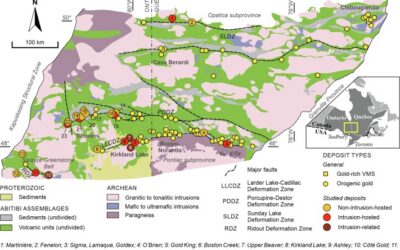
Mineral Exploration in the Abitibi Greenstone Belt: Geology, Deposit Types, and What to Expect in the Field
Image Source: https://www.sciencedirect.com/science/article/abs/pii/S016913682100247X The Abitibi Greenstone Belt produced more gold than almost any other Archean terrane on Earth, and the ground is still generating discovery-stage programs across northern Ontario and...
Beyond the Borehole: How 3D Geotechnical Modeling is De-Risking Modern Mine Design
The difference between a viable project and a costly oversight lies in the "digital twin" of the subsurface. Traditional 2D cross-sections, once the industry standard, are no longer sufficient for the complexities of modern resource extraction and the stringent safety...

Starting a Geology Career in Mining and Mineral Exploration
Graduating with a geology degree opens doors, but it can be hard to know which ones to walk through first. Many new graduates want work that's hands-on, technically meaningful, and connected to real projects, but translating that into an actual job search takes some...
Soil Sampling vs. Magnetic vs. Gravity Surveys in Canada’s Covered Terrain
Canada is home to some of the world’s most promising mineral districts, but many of those opportunities lie beneath cover rather than in clean, exposed outcrops. Across much of the country, exploration teams work in terrain shaped by glaciation, transported...

2026 Regulatory Shifts in Geophysics & Geotechnical Reporting in Canada
For Canadian junior and major exploration firms, the "Qualified Person" (QP) is under more scrutiny than ever. As we move into 2026, the integration of geophysical data into NI 43-101 technical reports has evolved from "supplemental" to "essential." In an era of...
How Geophysical Surveys Support Mineral Exploration in Canada’s Remote and Covered Terrains
Canada is one of the most mineral-rich countries in the world, but much of that potential lies in places that are difficult, expensive, or logistically complex to explore. From vast stretches of the Precambrian Shield to sediment-covered basins and northern regions...

Gravity Surveys in Mineral Exploration: How They Work, What They Reveal, and Why They Matter
In mineral exploration, every decision hinges on understanding what lies beneath the surface before drilling begins. Gravity surveys provide a precise, cost-effective way to map subsurface density variations and uncover geological structures that may host valuable...

Why Magnetic and Gravity Surveys Are Essential for Mineral Exploration in Canada
Canada is one of the most geophysically explored countries in the world. With vast mineral potential spread across the Precambrian Shield, structurally complex greenstone belts, sedimentary basins, and remote northern terrains, Canadian exploration has long relied on...