Qualified geologists placed for exploration programs across North America
Exploration programs stall when the right geologist is not in the field. A drill program timed to a short field season does not wait for a six-week recruiting cycle, and placing a geologist with the wrong deposit-type background into a Carlin-type sediment-hosted system or a Stikine Terrane porphyry program costs more than the placement fee. Getting the match right the first time is the only acceptable outcome.
Rangefront's contract labor and recruiting services have been placing contract geologists across the United States, Canada, and Alaska for over a decade. The network runs from Nevada and the Basin and Range through British Columbia, Yukon, and the Northwest Territories. Every placement is made by a person who has been in the field, not by a keyword-matching algorithm.
10+
Years placing contract
geologists in North America
3
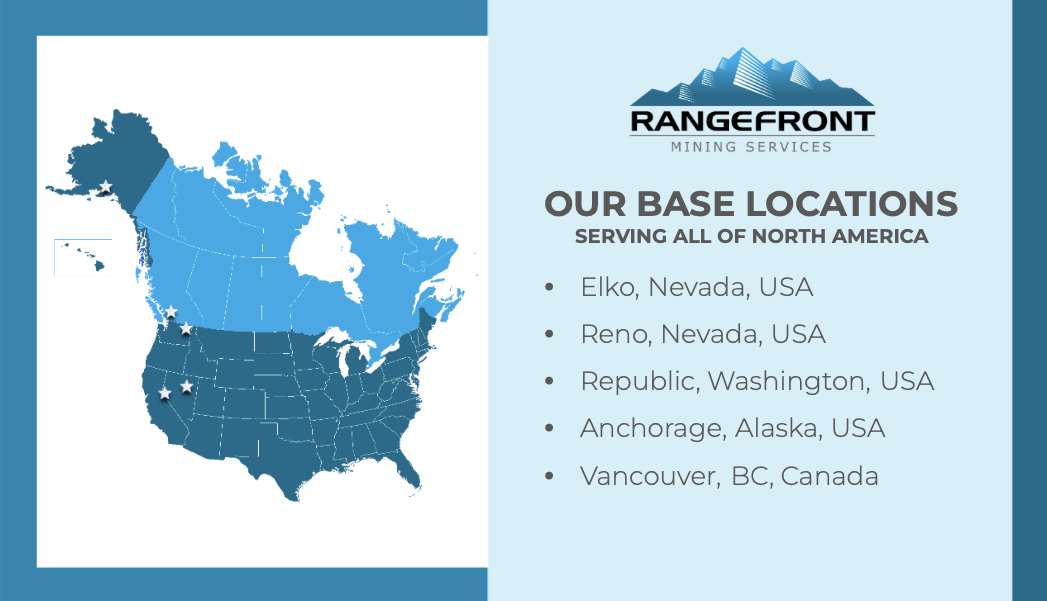
Regional offices: Elko NV,
Vancouver BC, Republic WA
8+
Deposit types covered
across the placement network
2
Countries with active
placement infrastructure
Contract geology services: how the model works
Contract geology services place qualified geologists with exploration companies, junior and major mining companies, and government geological survey programs on a defined-term or project-basis arrangement. The contract geologist works at the client's direction in the field or office; Rangefront handles the employment relationship, payroll, benefits administration, and regulatory compliance.
This model is built for programs with defined start dates, field seasons of limited duration, sudden staffing gaps from turnover, or project-stage requirements that do not justify a permanent hire. It gives companies access to senior technical talent at project cost rather than fixed overhead, and it gives geologists a structure that supports continuous employment between longer-term roles.
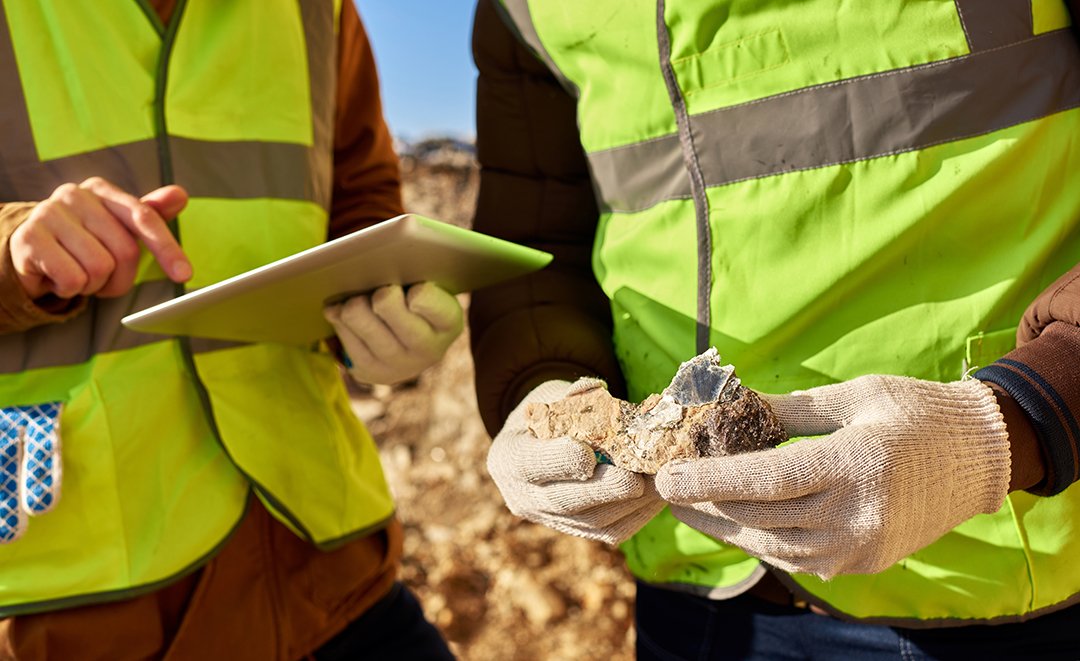
In a contract arrangement, the geologist remains a Rangefront employee for the duration of the engagement. When a company identifies a geologist they want to bring on permanently, that transition falls under direct-hire placement. Both models are available through Rangefront's direct-hire staffing practice.
How Rangefront places contract geologists
Every placement starts with a technical conversation, not a form submission. No AI-driven screening. No generic job board sourcing. A Rangefront team member speaks directly with the hiring geologist or project manager to establish actual placement criteria before any candidates are presented.
01
Technical Intake
A Rangefront team member discusses deposit type, project stage, required field methods, geographic location, expected duration, and any NI 43-101 technical report or regulatory reporting requirements. A company running gravity and IP surveys on a porphyry copper target in the Quesnel Terrane has different requirements than one logging RC chips on a low-sulfidation epithermal target in Lander County, Nevada. We do not send the same candidate slate to both programs.
02
Candidate Selection and Matching
Rangefront maintains an active candidate network built through the geology graduate pipeline, repeat placements, and referrals from working geologists who have been in the Rangefront system. Candidates are not sourced exclusively through job board postings. Matching proceeds on deposit-type experience first, then field method proficiency, then geographic familiarity. Stated experience is verified through direct reference checks.
03
Candidate Presentation
Clients receive a short, specific candidate brief, not a stack of resumes, along with a direct conversation with the Rangefront team member who knows each candidate's background. Every candidate who reaches a client interview has been evaluated by a person who understands what mapping a thrust-faulted sedimentary package in the Carlin Trend actually requires.
04
Interview and Mobilization
Clients conduct their own technical interviews. Rangefront facilitates introductions and scheduling but does not substitute its judgment for the client's. Once selected, Rangefront manages employment paperwork, benefits enrollment, and mobilization logistics so the geologist can start work on the client's timeline.
Canadian placements
Rangefront's Vancouver, British Columbia office (Suite 401, 353 Water Street) supports placements across all major Canadian exploration jurisdictions: British Columbia, Yukon, Northwest Territories, Alberta, Ontario, Quebec, and Newfoundland and Labrador. The team is familiar with the NI 43-101 technical report framework that governs disclosure for Canadian-listed companies. Learn more about Rangefront's Canadian mining services.
Companies working through Canadian exchanges or requiring qualified person oversight on their programs should discuss those requirements during the intake call. Rangefront will clarify what falls within the contract geology placement scope and what requires a separate qualified person engagement.
Where contract geologists are placed
The five scenarios below represent the most common placement contexts across Rangefront's current active programs. Each has distinct match criteria; the intake conversation establishes which applies to your program.
Drill Program Support
Core logging, RC chip logging, collar mapping, sample preparation oversight, and on-site QA/QC monitoring. Program durations typically run from four weeks to a full field season depending on hole count and drilling pace.
Greenfield and Brownfield Exploration
Geological mapping, soil and rock chip sampling, structural analysis, and target generation. Requires geologists with specific deposit-type experience: distal porphyry alteration halos in the Stikine Terrane, jasperoid and decalcification signatures in Elko County, or VMS-prospective stratigraphy in the Flin Flon Belt.
Resource Definition
Programs advancing toward an NI 43-101 technical report or S-K 1300 (SEC) resource estimate need geologists who can work within a documented QA/QC framework, maintain chain-of-custody discipline, and produce logs and maps that will hold up to a qualified person's review.
Geophysical Program Support
Ground geophysical surveys, including induced polarization, gravity, and magnetics programs, often require a field geologist to manage logistics and correlate geophysical responses with surface geology in real time. Rangefront can simultaneously provide the survey crew, delivering a single mobilization for both program components.
Interim and Gap Coverage
Turnover happens mid-program. A project geologist takes another position, a senior geologist takes medical leave, or a program accelerates faster than the internal team can staff. The intake-to-mobilization timeline for a well-matched placement is shorter than most internal HR processes for a comparable hire.
Key placement parameters
The following parameters define the structure of a Rangefront contract geology engagement. Discuss specifics for your program during the intake call.
| Parameter | Details |
|---|---|
| Engagement Duration | Engagements range from short-term gap coverage of a few weeks to multi-season programs spanning a year or more. Duration is defined at the outset and can be extended by mutual agreement. |
| Employment Structure | Contract geologists are Rangefront employees for the duration of the engagement. Benefits are active from day one: health, dental, and vision coverage, 401(k), maternity leave, boot reimbursement, and vacation cash. No waiting period for core benefits. Transitions to permanent direct-hire available mid-engagement by mutual agreement. |
| Geographic Coverage | Active placement capability across the contiguous United States, Alaska, and all major Canadian provinces and territories with active exploration activity. Remote and fly-in program logistics within operational scope. Elko HQ: US placements. Vancouver office: Canadian and Alaska programs. Republic office: Pacific Northwest and southern BC corridor. |
| Reporting Standards | Placements for programs requiring NI 43-101, S-K 1300 (SEC), or JORC Code compliance are handled with awareness of the documentation standards involved. Specify reporting requirements during intake so candidate selection reflects the documentation environment the geologist will work in. |
| Candidate Presentation Timeline | Rangefront will discuss realistic timelines during the intake call based on current network availability and the specificity of the match criteria. Programs with standard requirements and reasonable timelines receive faster candidate presentation than highly specialized roles in remote jurisdictions. Contact (775) 753-6605 for current availability on your program type and region. |
Where Rangefront places geologists
Rangefront's placement network covers the full range of North American exploration geography, including regions where field logistics are genuinely demanding: fly-in programs in the Yukon and Northwest Territories, high-altitude terrain in the Basin and Range and the Colorado Plateau, active mine-site environments requiring site-safety induction, and coastal and island-access programs in British Columbia.
The Elko, Nevada headquarters (1031 Railroad Street, Suite 102B) serves as the primary intake point for US-based placements, with particular depth of network in Nevada's major mineral belts: the Carlin Trend, the Battle Mountain Trend, the Walker Lane, and Humboldt and Lander counties. The Republic, Washington office (147 North Clark Ave, Unit 2) serves the Pacific Northwest and southern BC corridor. The Vancouver office handles the bulk of Canadian and Alaska program placements.
Rangefront does not represent geographic coverage it cannot staff. If a requested jurisdiction is outside current network depth, the intake conversation will surface that honestly. The team will advise on realistic options rather than overpromise a placement timeline.
Why Rangefront for Contract Geology Placement
10+
Years of active North American
contract geology placement
3
Regional offices with local
network depth in each market
0
Automated screening steps
between candidate and client
Day 1
Benefits effective from first
day of engagement, no waiting period
Deposit-Type Matching
The difference between a geologist experienced in orogenic gold systems and one experienced in porphyry copper is not captured in a resume scan for "field geology" or "mapping experience." Rangefront's placement process starts with the deposit and works backward to the candidate.
Re-Employment Network
Rangefront's candidates return for multiple placements across multiple programs. That re-employment focus means the network stays current, the team knows each candidate's real field performance, and references are not a formality.
Geology Graduate Pipeline
Rangefront has a deliberate focus on bringing geology graduates into the field early in their careers, building skills on real exploration programs. For clients, this means access to a pool of motivated, technically current candidates who are not waiting for a position to appear on a job board.
Full Benefits from Day One
Health, dental, and vision coverage, 401(k) enrollment, maternity leave, boot reimbursement, and vacation cash from the first day of engagement. Geologists who are well-supported stay on programs longer, perform better, and return for subsequent placements.
Person-to-Person Process
Every placement involves a direct conversation between a Rangefront team member and both the client and the candidate. This is slower than algorithmic matching in some cases and faster in the cases where it matters most: when placement criteria are specific and the timeline is tight.
Integration with other Rangefront services
Contract geology placement fits naturally within larger program engagements. For companies running a field season that includes both geological and geophysical work, Rangefront can provide contract geologists for the mapping and sampling components while simultaneously deploying a survey crew through its geophysical services practice. That coordination reduces the number of separate contractor relationships a project manager needs to manage.
Geophysical Survey Services
IP, gravity, magnetics, CSAMT, and drone UAV programs deployed alongside your contract geology team under a single mobilization.
Field Crew Services
Claim staking, soil and rock chip sampling, and annual claim renewal crews that complement geological field programs.
Direct-Hire Placement
When a contract engagement identifies a geologist a client wants to retain permanently, the transition to direct-hire placement is handled without disruption to the project.
Technical Services
3D geological modeling, NI 43-101 technical reporting, and geological consulting that extends the work your contract geology team initiates in the field.
Geologists seeking to enter or re-enter the North American exploration job market can review open positions and submit their background at rangefront.com/geology-jobs. The recruiting team reviews submissions and follows up when a well-matched program becomes available.
Common questions about contract geology placement
§ 11 Start Your Placement
Tell us your deposit type, your timeline, and what the geologist will actually be doing on the ground.
Rangefront will tell you honestly what is in the network and what we can deliver. For US-based programs, start with our Elko, Nevada headquarters. For Canadian programs, our Vancouver office handles intake directly. Reach us by phone, email, or the project quote form below.
Elko, Nevada (US headquarters): 1031 Railroad Street, Suite 102B | Vancouver, BC (Canadian headquarters): Suite 401, 353 Water Street | Republic, Washington: 147 North Clark Ave, Unit 2 | info@rangefront.com