
Graduating with a geology degree opens doors, but it can be hard to know which ones to walk through first. Many new graduates want work that’s hands-on, technically meaningful, and connected to real projects, but translating that into an actual job search takes some direction.
For geology graduates drawn to mining and mineral exploration, early career opportunities can deliver exactly that: field experience, technical development, industry connections, and a grounded understanding of how projects evolve from early-stage exploration to more advanced phases. The right first role — and the right employer — can make a significant difference in how quickly that foundation develops.
Why Mining and Exploration Rewards Geology Graduates Early
Few industries offer a geology graduate the chance to apply their training in as immediate and practical a way as mining and exploration. Rather than spending early career years in narrow or support-oriented roles, geologists in this field can participate in mapping, sampling, core logging, data interpretation, geophysical surveys, technical reporting, and field program support, often within their first positions.
For a new graduate, breadth matters. Exposure to how different parts of a project fit together, from claim staking and soil sampling through to 3D modeling and technical reporting, builds practical judgment faster than a role with repetitive or limited scope. Rangefront Mining Services is positioned specifically at this intersection, with service lines spanning exploration and field crew, geophysical services, technical services, and mineral exploration support across North America.
What to Look for in a First Geology Job
Not every entry-level geology role offers the same value. Some positions build a strong foundation; others provide employment without much direction or continuity. When evaluating opportunities, a few factors stand out:
Exposure to active projects. The most valuable early roles connect graduates to real exploration or mining work, such as field support, sampling, logging, mapping, data handling, or technical assistance under experienced geologists. Even a supporting role on an active project teaches industry standards, safety expectations, and the pace of professional work in ways a classroom cannot replicate.
A path forward. Contract work is common in geology-adjacent industries, and it’s not uncommon to find yourself searching for the next position each time a project or season ends. That pattern doesn’t have to be the norm. Rangefront works closely with the mining and exploration companies it staffs, and many candidates placed through Rangefront are eventually hired on full-time. For contracts without long-term potential, the focus shifts to re-employment before a placement ends, which is a meaningfully different approach than simply filling a vacancy and moving on.
Flexibility between contract and direct-hire roles. Both paths have merit early in a career. Contract work offers faster experience accumulation, broader exposure, and networking across multiple teams and project types. Direct-hire roles offer longer-term stability and a more traditional career track. Having access to both, rather than being pushed toward one, gives graduates room to figure out what kind of work environment, location, and project type actually suits them.
Practical support. Benefits matter beyond the hourly rate, particularly for field-based work. Rangefront offers health, dental, vision, life insurance, 401(k), maternity leave, bereavement leave, vacation cash, and new home purchase incentives, along with reimbursement for steel-toed boots and prescription safety glasses. That last detail reflects something important: an employer who understands what the work actually requires.
The Types of Early Experience That Build a Geology Career
Graduates often ask some version of the same question: What kind of geology job should I take first? The answer depends on interests and goals, but certain types of early work tend to build durable, marketable experience.
Field-based exploration support teaches observation, accuracy, and professional adaptability. Work tied to claim staking, soil and rock chip sampling, or exploration logistics develops the operational instincts that inform good geological judgment — skills that remain valuable regardless of how a career evolves.
Technical and data-oriented roles suit graduates who are drawn to the interpretation side of geology: mapping, modeling, reporting, and geophysical analysis. These skills tend to compound over time and stay relevant across different project types and career stages.
Contract roles across multiple projects can be a particularly strong launch point because they accelerate exposure. Working across different teams, sites, and project environments in a compressed timeframe builds both experience and clarity, helping graduates understand sooner which direction they want to move.
How to Stand Out as a New Graduate
Employers in mining and exploration understand that graduates are still building experience. What they’re evaluating is readiness: to work, to learn, and to contribute professionally in a field environment.
A few things help. Leading with relevant coursework, such as economic geology, structural geology, geochemistry, GIS, field camp, signals preparation. Communicating genuine openness to travel, remote locations, rotational schedules, and physically demanding environments signals that the candidate understands what exploration work involves. And demonstrating seriousness about safety and professional reliability goes further than many new graduates expect.
It’s also worth submitting a resume even when a specific opening isn’t posted. At Rangefront, we explicitly invite candidates to submit a resume and will reach out when a suitable role becomes available. For upcoming graduates, timing a job search to align with a posted listing is often more constraining than necessary.
What Rangefront’s Approach Signals to Candidates
Rangefront’s hiring process of qualification, interview, placement, and active follow-up, reflects a more deliberate model than simply filling vacancies. The follow-up step, in particular, matters for early-career professionals: transitioning from school into field-based mining or exploration work is a significant shift, and a hiring partner that stays engaged after placement provides meaningful support during that adjustment.
The broader point is that Rangefront operates within the same service areas many geology graduates are trying to build experience in. This isn’t a generalist staffing firm with occasional geology openings; it’s a company whose work spans exploration field crews, geophysical services, technical services, and mineral exploration support, with offices in Elko, Nevada; Republic, Washington; and Vancouver, British Columbia.
For graduates open to travel, project-based work, or opportunities beyond a single local market, that footprint is a genuine advantage.
A First Job Should Open Doors, Not Just Fill Time
The best early geology role isn’t always the one with the most impressive title. More often, it’s the one that delivers relevant experience, access to strong teams, and room to keep developing. That’s a harder thing to evaluate from a job listing alone, which is why the employer and the hiring model matter as much as the specific role.
Explore current openings or submit your resume at Rangefront.com/jobs.

ABOUT THE AUTHOR
BRIAN GOSS
President, Rangefront Mining Services
Brian Goss brings over 20 years of experience in gold and mineral exploration. He is the founder and President of Rangefront, a premier geological services and mining consulting company that caters to a large spectrum of clients in the mining and minerals exploration industries. Brian is also a director of Lithium Corp. (OTCQB: LTUM), an exploration stage company specializing in energy storage minerals and from 2014 to 2017, he fulfilled the role of President and Director of Graphite Corp. (OTCQB: GRPH), an exploration stage that specialized in the development of graphite properties. Prior to founding Rangefront, Brian worked as a staff geologist for Centerra Gold on the REN project, as well as various exploration and development projects in the Western United States and Michigan. Brian Goss holds a Bachelor of Science Degree with a major in Geology from Wayne State University in Michigan.
You may also be interested in...
Popular Career Paths in Mining Geology
Geologists specializing in mining are integral to mining, manufacturing, and energy industries worldwide. As the demand for minerals and metals continues to grow, driven by technological advancements and global development, the role of geologists in this field becomes...

The Limitations of Geophysical Surveys in Mineral Exploration
Geophysical surveys are an important tool in a wide range of industries, from archeology and environmental science to mineral exploration and mining. These surveys use various methods to scan the subsurface to reveal information about potential structures and...
Mining Claims: How Long They Last & Important Factors to Consider
One of our most popular articles on Rangefront.com is “How to Stake a Mining Claim.” It is also one of the most common services (as well as recruitment and staffing) we receive inquiries for. However, there is one question that requires a little more explanation: How...
What Types of Geology Jobs are Available in the Mining Industry?
For individuals with a geology degree, finding a job in the mining industry can be a great way to directly use geology expertise while being out in the field. While some geologists enjoy lab work or teaching, many geologists prefer to be outdoors, exploring and taking...

Mining Career Guide 2024
ARE MINING JOBS IN DEMAND? Mining jobs are in demand, as the need for minerals continues rising while skilled workers to fill these openings are difficult to find. Metal ore mining jobs are expected to grow by 16.3% over the next 10 years, which is higher than the...
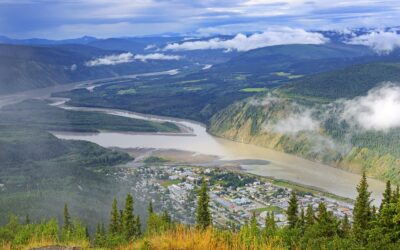
Why Canada Has So Many Mining Companies
Canada is renowned for its stunning natural landscapes, friendly people, and a rich cultural tapestry. However, it's also a global leader in an industry that's not always in the spotlight but plays a significant role in the nation's economy: mining. WHAT MAKES CANADA...
Geophysical Surveys: Purposes & Cost
A geophysical survey is a non-invasive method of studying the subsurface properties of the Earth by measuring various physical properties, such as magnetic, seismic, and gravitational properties. These surveys are commonly conducted to gain insights into the...

Geophysical Surveys: Types of Surveys & Use Cases
Geophysical services refer to a branch of geological consulting that provides surveys and reporting to gather, interpret, and map geophysical data. These services are typically used for measuring, analyzing, and optimizing resources for mining or geology, and can also...
Mining & Mineral Exploration: Differences & Common Misconceptions
Mining and mineral exploration are a high-risk, high-reward process, requiring a high level of expertise, research, and—sometimes—a little luck. While many mineral exploration efforts never result in actual mining production operations, those that do can be highly...
Rangefront Mining Services Expands Local Field Crew Team to Washington State
Rangefront welcomes Daniel Reiss to the Rangefront team to head our new Washington state-based field crew, an expansion that will reduce already affordable costs for field crew services in the Northwest territories. July 2023 Elko, NV---Rangefront welcomes Daniel...

Geologists in the Mining Industry: Common Jobs & Career Outlook
Geology and the mining industry are naturally associated because of the expertise required to find and analyze potential deposits in bedrock. Because of that, many seeking a degree in geology will have their sights set on career opportunities in the mining industry,...
Common Challenges Mining Consultants Help Resolve
Utilizing a mining consultant during the mining and exploration process is an integral part of most operations’ strategies. As well as maximizing value and operational performance, a mining consultant can help shape strategy, drive innovation, and mitigate risks from...