If you have recently received an Abandoned Mine Lands (AML) hazard notice, you may be wondering exactly what AML hazard fencing is and why it is important.
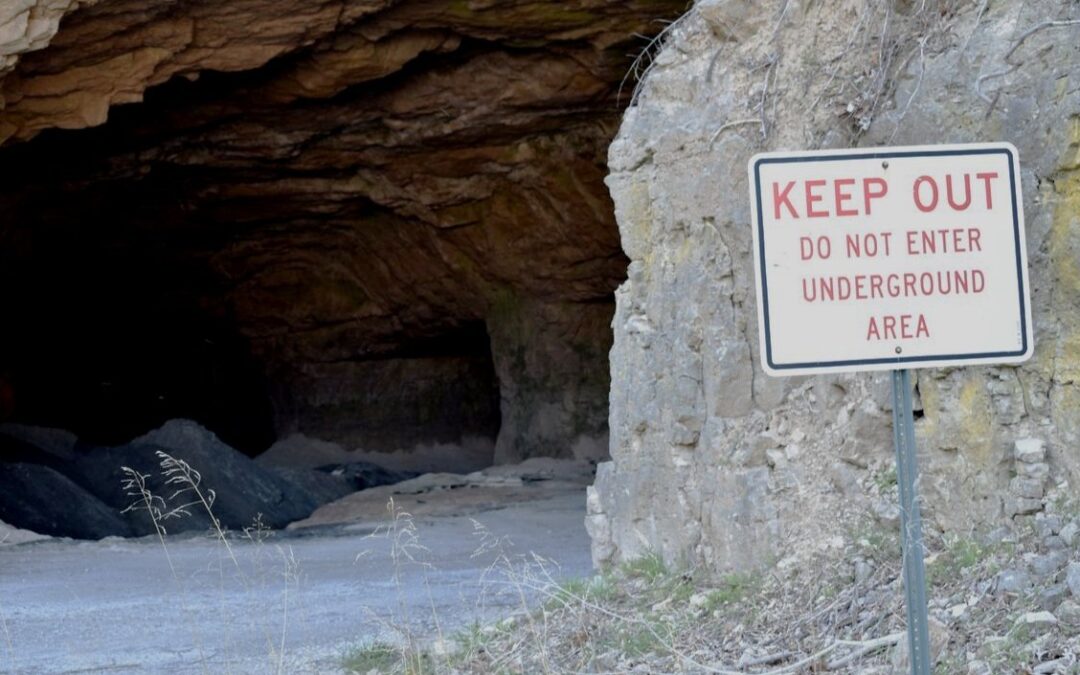
Until recently, prospectors were allowed to leave a mine site without being required to leave the property in a safe condition. These aging abandoned mines may contain sheer drop-offs, unstable earth, abandoned equipment, trapped gasses, deep standing water, and more. With no posted warning signs or barriers required, abandoned mines became a hazard across the country. Each year, individuals in the United States are injured or killed in these mining hazards due to falls, entrapment, drowning, and more. To help prevent accidents, owners of abandoned mine land are required to erect and maintain AML hazard notices and barricades.
To aid in this safety effort, several state and federal organizations identify and monitor abandoned land mines. Landowners are asked to proactively manage AML hazard fencing around known abandoned mine lands, even if they have not received a notice, to help protect the public.
WHAT IS AML HAZARD FENCING?
AML hazard fencing refers to posted signage, barricades, and/or fences erected around abandoned mine land areas and access points. These barricades and signs are intended to help protect individuals from undue access and injury.
For ordered AML Hazard fencing required by a state or federal program, there are minimal requirements for these signs and barricades that must be followed depending on access point type and hazard level. Individuals receiving an AML Hazard Notice will be provided a certain amount of time (typically between 60-180 days, depending on the hazard level) to erect this fencing and send proof of completion. In addition, landowners are required to maintain these notices and barricades to ensure safety.
COMMON ABANDONED MINE LAND HAZARDS
What’s so dangerous about abandoned mine land hazards? When mines are constructed, they have safety precautions in place that are intended only for the short term. When these mines were abandoned, vertical openings were often left uncovered, support structures were removed or left to rot, and safety systems such as ventilation and water-pumping equipment were removed.
There are several types of hazards that may be present at an abandoned mine site depending on the size, scope, equipment, and location of the mine.
- Adits, Declines, and Shafts. Open adits and shafts are the most common type of hazard in the Western United States. Adits tunnel into the ground horizontally, declines tunnel in at an angle, and shafts tunnel down vertically. These diggings can be unstable and there may not be much indication the hazard is there until someone is very close to it.
- Trenches and Pits. Trenches and Pits are common in historical mining districts. Many times the walls are unstable; these areas need to be fenced to keep people out and warn people that a hazard is in the area.
- Water Hazards. The largest cause of death in abandoned mines in the United States is water. Many abandoned mines become flooded, leaving water that may be dangerously deep and cold, as well as having slippery walls, steep drop-offs, and other hazards.
- Gasses & Oxygen Deficiency. Mines are also at risk of accumulating pockets of deadly gasses such as carbon monoxide, methane, or even pockets of still air that have little oxygen concentration.
- Cave-Ins. Even active mines are at risk of cave-ins, but for abandoned mines, this risk increases. Over time, bedrock can become increasingly unstable due to weathering, blasting, water accumulation, and other factors. This makes even casual exploration dangerous in or around an abandoned mine.
- Highwalls. Underground mines are not the only AML areas that contain risks. Open pits and quarries also contain risks. Highwalls are vertical or near-vertical edges of these pits or quarries. These areas can be prone to collapse, which makes them dangerous to climb on or near.
AML HAZARD FENCING SERVICES
If you’d like to learn more about AML hazard fencing requirements or services, please reach out to Rangefront’s mining services experts today.

ABOUT THE AUTHOR
BRIAN GOSS
President, Rangefront Mining Services
Brian Goss brings over 20 years of experience in gold and mineral exploration. He is the founder and President of Rangefront, a premier geological services and mining consulting company that caters to a large spectrum of clients in the mining and minerals exploration industries. Brian is also a director of Lithium Corp. (OTCQB: LTUM), an exploration stage company specializing in energy storage minerals and from 2014 to 2017, he fulfilled the role of President and Director of Graphite Corp. (OTCQB: GRPH), an exploration stage that specialized in the development of graphite properties. Prior to founding Rangefront, Brian worked as a staff geologist for Centerra Gold on the REN project, as well as various exploration and development projects in the Western United States and Michigan. Brian Goss holds a Bachelor of Science Degree with a major in Geology from Wayne State University in Michigan.
You may also be interested in...

Annual Claim Renewals Updated for 2026: Mining Claim Maintenance & Assessment Information
Late summer is a critical time for the mining and exploration industry. The deadline for Annual Mining Claim Renewals is September 1, and it arrives fast. Whether you’re a small-scale prospector or managing dozens of claims, it’s essential to ensure your filings,...
Combining Drone and Ground Mag Surveys: More Data, Less Time in the Field
A magnetic survey is only as good as the data density behind it. Two survey platforms, flown and walked over the same ground on the same program, can double that density without doubling your budget or your schedule. That is the logic behind Rangefront's approach to...
Yukon Geophysical Surveys: Season Planning and Field Logistics
The Yukon exploration season is shorter than most project managers account for, and the margin for a poorly timed mobilization is close to zero. Between spring break-up, permafrost thaw cycles, and the onset of fall freeze, the usable field window for most ground...
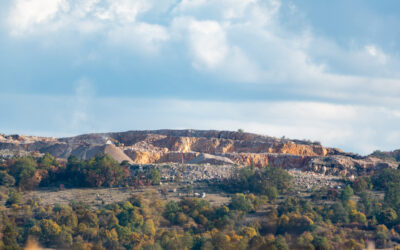
How to Read an IP Pseudosection: Interpreting Chargeability and Resistivity Anomalies Before You Drill
A chargeability anomaly that looks like a porphyry target and turns out to be graphitic shale is a wasted drill hole, a budget hit, and a credibility problem in front of your board. Reading an IP pseudosection correctly before the rig mobilizes is one of the...
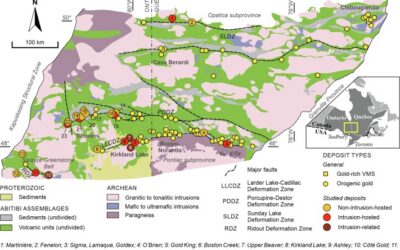
Mineral Exploration in the Abitibi Greenstone Belt: Geology, Deposit Types, and What to Expect in the Field
Image Source: https://www.sciencedirect.com/science/article/abs/pii/S016913682100247X The Abitibi Greenstone Belt produced more gold than almost any other Archean terrane on Earth, and the ground is still generating discovery-stage programs across northern Ontario and...
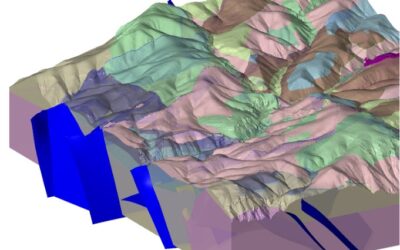
Beyond the Borehole: How 3D Geotechnical Modeling is De-Risking Modern Mine Design
The difference between a viable project and a costly oversight lies in the "digital twin" of the subsurface. Traditional 2D cross-sections, once the industry standard, are no longer sufficient for the complexities of modern resource extraction and the stringent safety...

Starting a Geology Career in Mining and Mineral Exploration
Graduating with a geology degree opens doors, but it can be hard to know which ones to walk through first. Many new graduates want work that's hands-on, technically meaningful, and connected to real projects, but translating that into an actual job search takes some...
Soil Sampling vs. Magnetic vs. Gravity Surveys in Canada’s Covered Terrain
Canada is home to some of the world’s most promising mineral districts, but many of those opportunities lie beneath cover rather than in clean, exposed outcrops. Across much of the country, exploration teams work in terrain shaped by glaciation, transported...

2026 Regulatory Shifts in Geophysics & Geotechnical Reporting in Canada
For Canadian junior and major exploration firms, the "Qualified Person" (QP) is under more scrutiny than ever. As we move into 2026, the integration of geophysical data into NI 43-101 technical reports has evolved from "supplemental" to "essential." In an era of...
How Geophysical Surveys Support Mineral Exploration in Canada’s Remote and Covered Terrains
Canada is one of the most mineral-rich countries in the world, but much of that potential lies in places that are difficult, expensive, or logistically complex to explore. From vast stretches of the Precambrian Shield to sediment-covered basins and northern regions...

Gravity Surveys in Mineral Exploration: How They Work, What They Reveal, and Why They Matter
In mineral exploration, every decision hinges on understanding what lies beneath the surface before drilling begins. Gravity surveys provide a precise, cost-effective way to map subsurface density variations and uncover geological structures that may host valuable...

Why Magnetic and Gravity Surveys Are Essential for Mineral Exploration in Canada
Canada is one of the most geophysically explored countries in the world. With vast mineral potential spread across the Precambrian Shield, structurally complex greenstone belts, sedimentary basins, and remote northern terrains, Canadian exploration has long relied on...