
The mining industry has entered a defining decade. As the world transitions toward clean energy and critical mineral demand surges, career opportunities in mining are expanding across every level from field crew operators to geoscientists, engineers, and project leaders. What was once seen as an old-world trade is now one of the most technologically advanced, globally relevant, and financially rewarding sectors to work in.
This 2026 guide brings together insights from Rangefront’s top geological mining career resources, exploring job demand, salaries, and actionable strategies for launching or advancing a mining career. In this guide, we will focus on geological mining jobs, which are our particular specialty.
Whether you’re drawn to the technical challenges of geology, the satisfaction of working outdoors, or the stability of an essential industry, this handbook offers a practical roadmap to help you find your place in mining.
In this article:
Are Mining Jobs are Still in High Demand?
Types of Geological Mining Careers
The Highest Paying Mining Jobs in 2026
How to Find Mining Job Openings in 2026
Planning and Advancing your Geological Mining Career
Common Geological Mining Roles Explained
Preparing Yourself for Success
Why a Mining Career Makes Sense in 2026
Frequently Asked Questions
Are Mining Jobs Still in High Demand
Despite economic fluctuations and automation reshaping other industries, mining jobs are still high in demand as mining continues to experience strong, steady growth worldwide. Driven by the surge in critical minerals needed for clean energy, infrastructure, and technology, the sector’s demand for skilled professionals has never been higher. Here are some of the reasons mining jobs are still in high demand:
- A global shift toward electrification is reshaping the job market. Mining is experiencing a resurgence driven by the global race for critical minerals such as lithium, copper, cobalt, and nickel, which are the building blocks of batteries, electric vehicles, and renewable infrastructure. With the U.S. and Canada investing heavily in domestic resource development, exploration and production are expanding, and so are job opportunities.
- A retiring workforce is opening the door for new talent. Many experienced miners, engineers, and field supervisors who entered the industry in the 1980s and 1990s are nearing retirement. This generational turnover creates an urgent need for skilled and trainable replacements. In fact, analysts estimate that nearly half of the U.S. mining workforce will retire by 2030, leaving thousands of unfilled positions across exploration, processing, and safety management.
- Technology is transforming skill demand. Today’s mines integrate automation, remote sensors, and advanced geological modeling. Field crews operate drones and geophysicists interpret real-time 3D data sets. Professionals with hybrid expertise—mechanical aptitude plus digital fluency—are now the most sought-after.
- Pay reflects the challenge. Because mining often takes place in remote, physically demanding environments, and because the work directly affects multi-million-dollar production outputs, companies continue to offer competitive wages, signing bonuses, and relocation incentives to attract qualified talent.
Types of Geological Mining Careers
Geological mining offers opportunities at every skill level. Entry-level jobs, such as field crew or geo-technicians, provide hands-on experience that can lead to higher-paying roles. Those with technical training or degrees in geology or environmental sciences can move into specialized positions that combine fieldwork with advanced technology.
Operations and Field Support
These roles form the backbone of mineral discovery and development. In geological exploration and mining, operations and field support teams bridge the gap between scientific data and real-world production. From setting up drill rigs in rugged terrain to maintaining essential site infrastructure, these professionals ensure that exploration programs run efficiently and safely.
Maintenance technicians and field laborers keep operations moving behind the scenes. They maintain vehicles, support equipment, and assist with camp logistics.
Safety and adaptability are essential skills. Working in exploration often means operating in unpredictable environments such as mountain ranges, deserts, or arctic tundra, where weather, terrain, and resource logistics demand stamina and quick problem-solving.
These positions often serve as gateways to advancement. Many supervisors, geologists, and engineers begin their careers as field technicians or geo-technicians, developing a strong understanding of field conditions before moving into leadership roles. With experience, certifications, and a consistent record of reliability, operational workers can rise to supervisory or technical positions overseeing entire exploration teams.
Technical and Specialist Positions
These roles span geologists, geophysicists, metallurgists, engineers, and HSE professionals.
- A geologist may spend days mapping formations and analyzing drill cores
- Mining engineers design extraction plans that balance efficiency with environmental impact.
- Metallurgists and process engineers oversee the refinement of raw ore into usable metal
- HSE leaders protect workers and ecosystems through strict safety protocols.
- Hydrogeologists study how groundwater interacts with rock and soil within a mine or exploration site, helping to locate water resources, manage dewatering systems, and prevent environmental contamination.
- Core Logging Technicians handle and catalog drill core samples, photographing, measuring, labeling, and preparing them for geological logging and analysis
Supervisory and Managerial
Leadership in exploration and geology grows from hands-on experience. As geoscientists gain years in the field, many transition into supervisory and management roles overseeing exploration programs, field crews, and data analysis teams. A strong understanding of both technical workflows and field logistics makes these professionals invaluable to mining and exploration companies.
- Senior Geologists lead multi-disciplinary teams in planning and executing drilling campaigns, interpreting assay results, and refining geological models. They ensure data quality, coordinate with engineers and environmental specialists, and guide decisions that can determine whether a project advances to development.
- Exploration Managers take a broader view, managing budgets, timelines, and staff across multiple sites or regions. Their work involves coordinating drilling contractors, liaising with regulatory bodies, and aligning field results with company strategy and investor reporting requirements.
- Project Geologists and Field Supervisors often act as the bridge between exploration teams and corporate leadership. They oversee daily operations, enforce safety and sampling standards, and ensure that logistical and environmental considerations align with both corporate and ESG expectations.
These positions require both scientific and managerial acumen. Supervisors must balance budgets, staffing, and compliance while maintaining strong communication between field teams and decision-makers. As sustainability and transparency become more central to the mining industry, experienced geological leaders who can align exploration goals with ESG priorities are increasingly in demand.
Exploration and contracting opportunities are another entry path for roles in the geological mining industry. One of the best ways to establish and grow a career in mining is in entry-level contract labor opportunities such as field crew, geo-technicians, or junior geologists. These positions are typically fulfilled by a contract labor provider such as Rangefront. With the right fit and right company, many of these contractors end up being offered full-time roles after they’ve gained enough experience and proven their work ethic and value.
Interested in exploring geological mining job opportunities? Click here: Geological mining job openings.
The Highest Paying Mining Jobs in 2026
As demand for critical minerals rises and experienced professionals retire, wages across the mining industry continue to climb in 2026. From senior geologists and engineers to project managers and metallurgists, top earners combine technical expertise with leadership and safety excellence—skills that keep operations efficient, compliant, and profitable.
Project Director / Drilling Operations Director
Salary Range: $250,000 – $400,000+
A Project Director in the mining industry oversees the comprehensive management of mining projects, from planning and permitting to execution and closure. A Drilling Operations Director manages drilling logistics and field teams, optimizing methods for efficiency and compliance.
Why it Pays: These roles involve managing multi-million-dollar assets under high-stakes conditions. Their strategic decisions impact every aspect of a mining project’s success—from timeline and cost to safety and environmental footprint. Their combination of technical, legal, and financial expertise makes them indispensable.
Mining Engineer
Salary Range: $90,000 – $230,000
Mining Engineers are responsible for designing safe and efficient mines, planning extraction techniques, overseeing mine construction, and ensuring that operations adhere to regulatory standards. They may specialize in surface, underground, or materials handling systems.
Why it Pays: These professionals are the backbone of operational success, directly responsible for resource extraction efficiency, cost control, and workplace safety. With growing demand for engineers who understand automation and digital tools, top earners bring both technical and leadership skills to the table.
Mine Manager
Salary Range: $120,000 – $350,000
Mine Managers oversee all aspects of mine production, from staffing and logistics to compliance and budget management. Their goal is to meet production targets while ensuring a safe and efficient operation.
Why it Pays: As the highest-ranking on-site authority, Mine Managers shoulder responsibility for output, worker safety, and cost efficiency. Mines in remote or challenging environments often pay a premium to attract managers with a proven track record of operational excellence.
Geologists & Geoscientists
Salary Range: $70,000 – $230,000
Geologists identify and evaluate mineral deposits. Roles vary from Exploration Geologists mapping new resources to Mine Geologists monitoring ongoing extraction. Their insights guide where and how to mine profitably.
Why it Pays: In the age of clean energy, minerals like lithium and nickel are in high demand, and companies are investing heavily in exploration. Experienced senior geologists who can accurately model ore bodies and reduce exploration risk are highly valuable.
Project Managers And Consultants
Salary Range: $115,000 – $200,000+
These professionals manage mining projects across disciplines, including planning, budgeting, and regulatory coordination. Consultants provide expertise in permitting, ESG compliance, engineering design, or construction.
Why it Pays: Project Managers and consultants often step into complex or high-stakes projects where delays or errors are costly. Their ability to bring efficiency and accountability to major initiatives makes them essential to both large-scale and boutique operations.
Metallurgists
Salary Range: $50,000 – $220,000
Metallurgists focus on the extraction and processing of metals from ores, working to optimize recovery, refine processes, and reduce environmental impact.
Why it Pays: Metallurgists directly influence yield and profitability. Those working in high-value metals or developing innovative, eco-efficient recovery techniques are particularly sought-after and well-compensated.
Geophysicists
Salary Range: $70,000 – $200,000
Geophysicists use remote sensing, seismic, and magnetic technologies to analyze subsurface geology, helping identify optimal drilling sites without the need for early-stage excavation.
Why it Pays: By improving discovery rates and reducing costly guesswork in exploration, geophysicists offer significant ROI for mining companies. Their skills are especially valuable in greenfield developments and deep mineral targeting.
Occupational Health, Safety, and Environmental (HSE) Professionals
Salary Range: Up to $190,000
These professionals ensure mining operations meet safety, health, and environmental regulations. They create and enforce policies that protect workers and mitigate environmental damage.
Why it Pays: In an industry with high physical risks and growing ESG scrutiny, strong HSE leadership is non-negotiable. Top-tier professionals with experience across multiple sites or jurisdictions can command exceptional compensation.
How to Find Mining Job Openings in 2026
As a geological mining staffing and recruiting agency, Rangefront has decades of experience in the mining employment industry. Below are some of our top tips for finding mining jobs.
- Existing Network. One of the best places to start looking for a mining job is within your existing network. Even if you don’t yet have a professional network in the industry, reaching out to any friends, family, or associates in the mining industry may present opportunities. Having connections within the industry can mean you learn about job openings before they are publicly posted or can give you an extra leg up when the company is evaluating candidates.
- Recruiting Services. This is probably one of the top ways to get your foot in the door in the mining and exploration industries. There are mining staffing and recruiting companies that work with mining companies to help fill mining job openings. Organizations like Rangefront have a list of geological mining job openings online. The benefit of applying through a service like this is that even if you don’t get the specific job you applied for, the company can add you to their network of candidates and will reach out if a new job opening becomes available. If there are no current openings that fit your skillset, it’s still a good idea to get on the radar of these recruiting companies. See if there is a way to submit your resume to be considered for future positions.
- Job Sites Like LinkedIn or Indeed. If you don’t have an existing network or if none of your contacts are aware of current opportunities, you can check local job boards as well as LinkedIn and Indeed. ZipRecruiter is also a good resource for local and national job openings. If you search “mining/geology job openings” or “mining/geology jobs near me” in Google, it will present a list of local openings from multiple sources.
- Talking to Mining Workers in The Area. Finally, you can also find open positions by speaking with geology, exploration, or mining workers in the area. Consider searching #miningjobs, #nevadamining, or #mining on Instagram or LinkedIn and see if there are individuals or companies posting that you can start a conversation with. Ask friends and family if they know anyone in the industry who may be willing to meet up, or find out what local bars or restaurants workers like to go to at the end of the day and strike up a conversation. No one will know the available or upcoming job openings better than the workers with their boots on the ground.
Advice for Planning and Advancing Your Mining Career
Building a successful career in mining requires more than technical ability. The mining and explorations can present seasonal challenges, gaps between contracts, and relocation challenges. This means working in this industry, while rewarding, takes foresight, adaptability, and a commitment to continuous learning. Whether you’re just entering the industry or looking to move into a senior role, understanding how to strategically plan your next steps can help you turn hands-on experience into long-term advancement.
Start With a Clear Career Map
Whether your goal is to become a lead geologist or an operations manager, begin by understanding the education, training, and experience each stage requires. Use online mining career guides to identify which certifications or degrees are most relevant for your path.
Education Still Matters—But So Does Experience
While a high-school diploma and technical training can open the door. Those who gain early field experience can often rise quickly, since practical know-how and problem-solving are critical assets underground or on-site. However, for many higher-paying senior specialist or engineering positions typically require degrees in mining engineering, geology, or metallurgy, as well as years of experience. At least a bachelor’s degree paired with hands-on experience can catapult your success in this industry.
Build a Reputation for Safety and Dependability
Supervisors promote workers they trust to operate responsibly. Keeping a flawless safety record, volunteering for new tasks, and maintaining professionalism in camp life all signal leadership potential.
Cross-Train for Long-Term Growth
Learning multiple aspects of mining, such as blending operational, environmental, and logistical knowledge, positions you for managerial or consulting roles. Professionals who can connect departments are invaluable to large projects.
Adapt to Technological Change
The rise of 3D geological modeling and AI-driven monitoring systems means future leaders must be fluent in both field operations and data analytics. Upskill through workshops or online micro-credentials in automation, GIS, or drone applications.
Certifications and Readiness Matter
Many geological mining jobs require certain certifications. If you have certifications or have been certified in the past, it’s worth it to renew your certification and to have his information handy during a job hunt and prepare references in advance. Highlight any prior experience with heavy machinery, fieldwork, or digital systems like drone mapping—these details often determine short-list selections.
Flexibility Can Set You Apart
The most employable mining candidates are those open to relocation, rotational shifts, or contract work. Entry-level employees who demonstrate reliability in remote projects often advance quickly when permanent roles open.
Common Geological Mining Roles Explained
Mining has long been a steady career path, with worldwide needs for minerals and metals steadily growing as manufacturing, energy, and technology continue to boom. In the 21st Century, this is no exception, even as the world begins a broader transition to green energy. Because of this, metal ore mining jobs are expected to grow by 16.3% over the next 10 years, which is significantly higher than the anticipated national workforce growth rate of 7.66%
Field Crew
Field crew is a great entry-level mining job with a range of requirements for experience or education. This job is also a great opportunity for individuals who like to work outdoors. Field crew duties vary by mine or exploration site, but typically include “boots-on-the-ground” work such as soil sampling, claim staking, erecting or repairing fences or barriers, re-seeding areas, and more. Field crew members should be comfortable walking and hiking on uneven terrain often while carrying heavy loads. They should also be able to operate an ATV and use GPS and maps for navigation.
Geological Technicians
Geological technicians, or geo-techs, support geologists by collecting samples, logging drill cores, and maintaining databases. These roles provide hands-on exposure to exploration and can serve as a bridge to geological or environmental specializations.
Geologists and Geoscientists
Geologist and geoscientists interpret the earth. They conduct mapping campaigns, oversee drilling programs, and use modeling software like Leapfrog or Surpac to estimate resource size and grade. Their findings directly shape mine design and profitability.
Mining Engineers and Process Engineers
Mining, geology, and process engineers translate geological data into operational plans. They optimize pit layouts, design ventilation systems, and ensure extraction efficiency. Increasingly, they are also responsible for integrating sustainability and automation into mine design.
HSE Specialists
HSE (or health, safety, and environment specialists) ensure every worker returns home safely. They develop emergency plans, train crews, and oversee environmental monitoring. With public scrutiny on ESG performance, their role now extends beyond compliance to corporate accountability.
Project Managers and Consultants
Managers and consultants tie the entire process together—coordinating schedules, budgets, and cross-discipline teams. Many consultants transition from fieldwork to project management after a decade of experience, leveraging their technical understanding to guide clients through complex regulatory landscapes.
Preparing Yourself for Success
Success in mining is built through preparation, persistence, and the right mindset. By refining your skills, staying current with safety and technology standards, and networking within the industry, you can position yourself for lasting growth and opportunity. Here are some tips for success:
- Craft a results-focused resume. Highlight quantifiable achievements such as projects completed, cost savings, or safety milestones. Employers in mining value measurable results and reliability over generic claims.
- Show commitment to learning. Certifications such as Surface MSHA, RC Logging, and even first aid/CPR training can make you stand out. A willingness to learn signals adaptability, which is one of the most valued traits in modern mining and exploration operations.
- Network intentionally. Relationships drive this industry. Join local mining associations, attend job fairs, or volunteer at exploration projects. Every connection is a potential bridge to a new opportunity.
- Emphasize technology literacy. Even for hands-on roles, comfort with digital tools such as GPS, automated haul systems, and geospatial software proves you can thrive in the modern mine.
- Understand the bigger picture. Mining no longer operates in isolation. Demonstrate awareness of sustainability, community engagement, and reclamation. Candidates who recognize these responsibilities are seen as long-term assets, not just temporary hires.
Why a Mining or Geology Career Makes Sense in 2026
As the global economy pivots toward renewable energy and domestic resource security, mining and mining geology are emerging as some of the most resilient and future-focused industries. In 2026, pursuing a mining or geological mining career means joining a sector that offers stability, high earning potential, and the chance to contribute directly to the materials that power modern life.
- Financial rewards remain strong. As one of the best-compensated blue- and white-collar sectors, mining offers significant earning potential early in a career. Bonus programs, housing allowances, and travel stipends make remote postings especially lucrative.
- Career stability amid transition. Global infrastructure expansion and the clean-energy boom continue to fuel long-term demand for skilled workers. Even as automation reshapes some tasks, new roles in data analysis, remote operations, and sustainability are being created.
- Transferable skills for life. Mining professionals develop mechanical, leadership, and technical skills applicable in construction, energy, and manufacturing industries. Many geologists and engineers later move into environmental consulting or project management.
- A career with purpose. Working in mining connects you to something bigger—the raw materials that power economies and technologies. As the industry commits to sustainable practices, professionals can take pride in contributing to responsible resource development.
Frequently Asked Questions
Do I need a degree to work in mining?
Not always. Many entry-level roles require only a high-school diploma, strong work ethic, and relevant safety training. However, specialized or leadership positions usually require higher education.
Are mining jobs only in remote locations?
Most are, but that’s changing. Automation and regional expansion mean more companies are developing operations near established communities. Remote roles, though, typically pay more due to travel and living conditions.
How can I transition from another industry?
Highlight transferable skills like mechanical experience, heavy-equipment operation, logistics, or safety. Many professionals from construction, energy, and military backgrounds successfully pivot into mining through contract roles.
Which commodities are driving demand in 2026?
Lithium, nickel, copper, and rare earth elements lead the pack, driven by EV batteries and renewable technologies. Regions like Nevada, Arizona, Alaska, and Northern Canada are seeing especially strong exploration growth.
Final Thoughts
Mining in 2026 represents a fusion of tradition and innovation. It’s still about uncovering what lies beneath the surface, but now, it also means managing data, sustainability, and global supply chains. For those willing to learn, travel, and work hard, the rewards extend far beyond a paycheck: career stability, advancement potential, and the satisfaction of contributing to the resources that fuel modern life.
Whether you’re starting from the ground up or pivoting from another field, the path forward is clear: stay curious, stay safe, and keep building the skills that will shape the next generation of mining.
Ready to get started? Explore current opportunities on Rangefront’s careers page or connect with our recruiting specialists to discover where your skills fit in the modern mining industry.

ABOUT THE AUTHOR
BRIAN GOSS
President, Rangefront Mining Services
Brian Goss brings over 20 years of experience in gold and mineral exploration. He is the founder and President of Rangefront, a premier geological services and mining consulting company that caters to a large spectrum of clients in the mining and minerals exploration industries. Brian is also a director of Lithium Corp. (OTCQB: LTUM), an exploration stage company specializing in energy storage minerals and from 2014 to 2017, he fulfilled the role of President and Director of Graphite Corp. (OTCQB: GRPH), an exploration stage that specialized in the development of graphite properties. Prior to founding Rangefront, Brian worked as a staff geologist for Centerra Gold on the REN project, as well as various exploration and development projects in the Western United States and Michigan. Brian Goss holds a Bachelor of Science Degree with a major in Geology from Wayne State University in Michigan.
You may also be interested in...

Annual Claim Renewals Updated for 2026: Mining Claim Maintenance & Assessment Information
Late summer is a critical time for the mining and exploration industry. The deadline for Annual Mining Claim Renewals is September 1, and it arrives fast. Whether you’re a small-scale prospector or managing dozens of claims, it’s essential to ensure your filings,...
Combining Drone and Ground Mag Surveys: More Data, Less Time in the Field
A magnetic survey is only as good as the data density behind it. Two survey platforms, flown and walked over the same ground on the same program, can double that density without doubling your budget or your schedule. That is the logic behind Rangefront's approach to...
Yukon Geophysical Surveys: Season Planning and Field Logistics
The Yukon exploration season is shorter than most project managers account for, and the margin for a poorly timed mobilization is close to zero. Between spring break-up, permafrost thaw cycles, and the onset of fall freeze, the usable field window for most ground...
How to Read an IP Pseudosection: Interpreting Chargeability and Resistivity Anomalies Before You Drill
A chargeability anomaly that looks like a porphyry target and turns out to be graphitic shale is a wasted drill hole, a budget hit, and a credibility problem in front of your board. Reading an IP pseudosection correctly before the rig mobilizes is one of the...
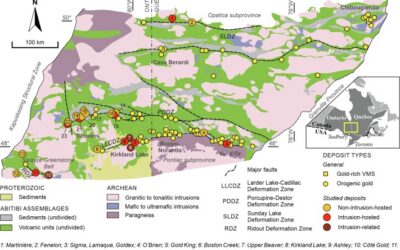
Mineral Exploration in the Abitibi Greenstone Belt: Geology, Deposit Types, and What to Expect in the Field
Image Source: https://www.sciencedirect.com/science/article/abs/pii/S016913682100247X The Abitibi Greenstone Belt produced more gold than almost any other Archean terrane on Earth, and the ground is still generating discovery-stage programs across northern Ontario and...
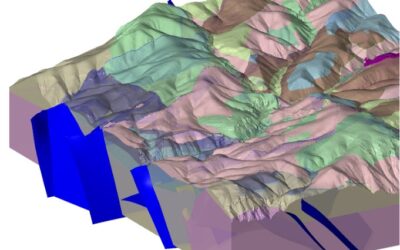
Beyond the Borehole: How 3D Geotechnical Modeling is De-Risking Modern Mine Design
The difference between a viable project and a costly oversight lies in the "digital twin" of the subsurface. Traditional 2D cross-sections, once the industry standard, are no longer sufficient for the complexities of modern resource extraction and the stringent safety...

Starting a Geology Career in Mining and Mineral Exploration
Graduating with a geology degree opens doors, but it can be hard to know which ones to walk through first. Many new graduates want work that's hands-on, technically meaningful, and connected to real projects, but translating that into an actual job search takes some...

Soil Sampling vs. Magnetic vs. Gravity Surveys in Canada’s Covered Terrain
Canada is home to some of the world’s most promising mineral districts, but many of those opportunities lie beneath cover rather than in clean, exposed outcrops. Across much of the country, exploration teams work in terrain shaped by glaciation, transported...

2026 Regulatory Shifts in Geophysics & Geotechnical Reporting in Canada
For Canadian junior and major exploration firms, the "Qualified Person" (QP) is under more scrutiny than ever. As we move into 2026, the integration of geophysical data into NI 43-101 technical reports has evolved from "supplemental" to "essential." In an era of...
How Geophysical Surveys Support Mineral Exploration in Canada’s Remote and Covered Terrains
Canada is one of the most mineral-rich countries in the world, but much of that potential lies in places that are difficult, expensive, or logistically complex to explore. From vast stretches of the Precambrian Shield to sediment-covered basins and northern regions...

Gravity Surveys in Mineral Exploration: How They Work, What They Reveal, and Why They Matter
In mineral exploration, every decision hinges on understanding what lies beneath the surface before drilling begins. Gravity surveys provide a precise, cost-effective way to map subsurface density variations and uncover geological structures that may host valuable...

Why Magnetic and Gravity Surveys Are Essential for Mineral Exploration in Canada
Canada is one of the most geophysically explored countries in the world. With vast mineral potential spread across the Precambrian Shield, structurally complex greenstone belts, sedimentary basins, and remote northern terrains, Canadian exploration has long relied on...