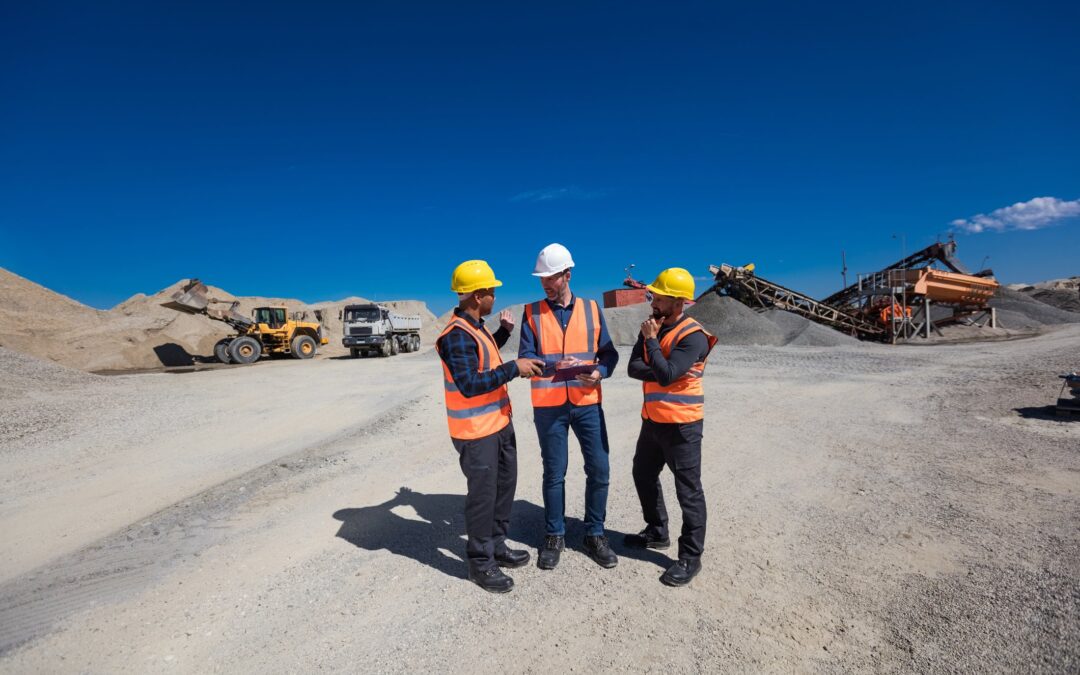
Geologists specializing in mining are integral to mining, manufacturing, and energy industries worldwide. As the demand for minerals and metals continues to grow, driven by technological advancements and global development, the role of geologists in this field becomes increasingly significant.
Mining offers a number of professional opportunities for individuals interested in geology, environmental science, and engineering, and the career opportunities contain a unique blend of outdoor exploration, scientific investigation, and technical challenges. In this article, we discuss some of the most common career paths for geologists in the mining industry.
TOP MINING GEOLOGY JOBS
Mining geology is a dynamic and evolving field that offers a variety of career paths for those interested in the exploration, extraction, and processing of mineral resources. In the mining industry, common geology jobs range from fieldwork to corporate roles.
1. EXPLORATION GEOLOGIST
Exploration geologists are responsible for identifying and evaluating new mineral deposits. This role involves extensive fieldwork, including geological mapping, sampling, and geophysical surveys. Exploration geologists work closely with a team of scientists and engineers to assess the feasibility of mining in new locations. This role is ideal for those who enjoy outdoor activities, travel, and the challenge of discovering new mineral resources.
2. MINE GEOLOGIST
Mine geologists work at the heart of the mining operation. They are responsible for the geological mapping of mining sites, sample analysis, and monitoring the quality and quantity of the ore extracted. Their expertise ensures the mining process is efficient, cost-effective, and environmentally compliant. This role requires a strong understanding of mineralogy, structural geology, and mining methods. It’s well-suited for individuals who enjoy practical, hands-on work in a challenging environment.
3. ENVIRONMENTAL GEOLOGIST
Environmental geologists in the mining sector play a crucial role in mitigating the environmental impact of mining activities. They assess and manage environmental risks associated with mining, such as soil and water contamination, land degradation, and ecosystem disruption. Their work involves conducting environmental impact assessments, developing restoration plans, and ensuring compliance with environmental regulations. This career path is ideal for those who are passionate about sustainability and environmental conservation.
4. GEOTECHNICAL ENGINEER
Although geotechnical engineering positions are technically an engineering role, is a viable career path for mining geologists with additional training in engineering. Geotechnical engineers focus on the engineering properties of earth materials and are involved in designing mine structures, such as pit walls and tunnels, ensuring their stability and safety. This role requires a deep understanding of rock mechanics and soil behavior and is suitable for those who have a strong interest in applying geological principles to solve engineering problems.
5. RESEARCH SCIENTIST/ACADEMIC
For those who are more inclined toward theoretical aspects of mining geology, a career in research or academia is a viable option. Mining geologists in academia conduct research on various aspects of earth sciences and mining, contribute to scientific literature, and teach the next generation of geologists. This path requires a Ph.D. in geology and is well-suited for individuals with a passion for research, teaching, and lifelong learning.
6. CONSULTING GEOLOGIST
Consulting geologists offer their expertise to mining companies on a project basis. They may be involved in a wide range of activities, including exploration, mine planning, environmental assessments, and resource valuation. This career path offers flexibility and variety in work, making it ideal for those who seek diverse experiences and enjoy problem-solving in different scenarios.
7. CORPORATE ROLES
Mining geologists with years of experience and additional qualifications in business or management can transition into corporate roles. These positions, such as project managers or executives in mining companies, involve overseeing mining projects, managing teams, and making strategic decisions. This path is suited for those who have strong leadership skills and a comprehensive understanding of the mining industry.
Final Thoughts
A career in mining geology is not only about rocks and minerals; it offers a diverse range of opportunities catering to different interests and skills. Whether it’s fieldwork, environmental management, research, or corporate leadership, there is a niche for every aspiring mining geologist.
To explore open geology jobs in mining projects across the United States and Canada, click “Explore Openings” below.

ABOUT THE AUTHOR
BRIAN GOSS
President, Rangefront Mining Services
Brian Goss brings over 20 years of experience in gold and mineral exploration. He is the founder and President of Rangefront, a premier geological services and mining consulting company that caters to a large spectrum of clients in the mining and minerals exploration industries. Brian is also a director of Lithium Corp. (OTCQB: LTUM), an exploration stage company specializing in energy storage minerals and from 2014 to 2017, he fulfilled the role of President and Director of Graphite Corp. (OTCQB: GRPH), an exploration stage that specialized in the development of graphite properties. Prior to founding Rangefront, Brian worked as a staff geologist for Centerra Gold on the REN project, as well as various exploration and development projects in the Western United States and Michigan. Brian Goss holds a Bachelor of Science Degree with a major in Geology from Wayne State University in Michigan.
You may also be interested in...

Annual Claim Renewals Updated for 2026: Mining Claim Maintenance & Assessment Information
Late summer is a critical time for the mining and exploration industry. The deadline for Annual Mining Claim Renewals is September 1, and it arrives fast. Whether you’re a small-scale prospector or managing dozens of claims, it’s essential to ensure your filings,...
Combining Drone and Ground Mag Surveys: More Data, Less Time in the Field
A magnetic survey is only as good as the data density behind it. Two survey platforms, flown and walked over the same ground on the same program, can double that density without doubling your budget or your schedule. That is the logic behind Rangefront's approach to...
Yukon Geophysical Surveys: Season Planning and Field Logistics
The Yukon exploration season is shorter than most project managers account for, and the margin for a poorly timed mobilization is close to zero. Between spring break-up, permafrost thaw cycles, and the onset of fall freeze, the usable field window for most ground...
How to Read an IP Pseudosection: Interpreting Chargeability and Resistivity Anomalies Before You Drill
A chargeability anomaly that looks like a porphyry target and turns out to be graphitic shale is a wasted drill hole, a budget hit, and a credibility problem in front of your board. Reading an IP pseudosection correctly before the rig mobilizes is one of the...
Mineral Exploration in the Abitibi Greenstone Belt: Geology, Deposit Types, and What to Expect in the Field
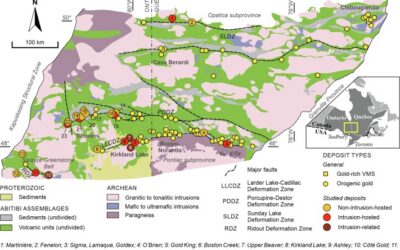
Image Source: https://www.sciencedirect.com/science/article/abs/pii/S016913682100247X The Abitibi Greenstone Belt produced more gold than almost any other Archean terrane on Earth, and the ground is still generating discovery-stage programs across northern Ontario and...
Beyond the Borehole: How 3D Geotechnical Modeling is De-Risking Modern Mine Design
The difference between a viable project and a costly oversight lies in the "digital twin" of the subsurface. Traditional 2D cross-sections, once the industry standard, are no longer sufficient for the complexities of modern resource extraction and the stringent safety...

Starting a Geology Career in Mining and Mineral Exploration
Graduating with a geology degree opens doors, but it can be hard to know which ones to walk through first. Many new graduates want work that's hands-on, technically meaningful, and connected to real projects, but translating that into an actual job search takes some...
Soil Sampling vs. Magnetic vs. Gravity Surveys in Canada’s Covered Terrain
Canada is home to some of the world’s most promising mineral districts, but many of those opportunities lie beneath cover rather than in clean, exposed outcrops. Across much of the country, exploration teams work in terrain shaped by glaciation, transported...

2026 Regulatory Shifts in Geophysics & Geotechnical Reporting in Canada
For Canadian junior and major exploration firms, the "Qualified Person" (QP) is under more scrutiny than ever. As we move into 2026, the integration of geophysical data into NI 43-101 technical reports has evolved from "supplemental" to "essential." In an era of...
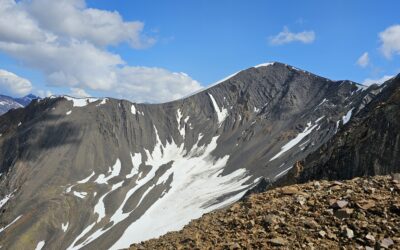
How Geophysical Surveys Support Mineral Exploration in Canada’s Remote and Covered Terrains
Canada is one of the most mineral-rich countries in the world, but much of that potential lies in places that are difficult, expensive, or logistically complex to explore. From vast stretches of the Precambrian Shield to sediment-covered basins and northern regions...

Gravity Surveys in Mineral Exploration: How They Work, What They Reveal, and Why They Matter
In mineral exploration, every decision hinges on understanding what lies beneath the surface before drilling begins. Gravity surveys provide a precise, cost-effective way to map subsurface density variations and uncover geological structures that may host valuable...

Why Magnetic and Gravity Surveys Are Essential for Mineral Exploration in Canada
Canada is one of the most geophysically explored countries in the world. With vast mineral potential spread across the Precambrian Shield, structurally complex greenstone belts, sedimentary basins, and remote northern terrains, Canadian exploration has long relied on...