
This executive action arrives at a time when nations around the world are grappling with how to secure mineral supply chains in the face of geopolitical tensions, climate goals, and surging demand for green technologies. The directive has been met with both support and concern—praised by industry groups for addressing long-standing regulatory hurdles and critiqued by environmental and Indigenous rights organizations for the potential to weaken safeguards.
This article explores the policy’s core provisions, economic rationale, potential risks, and broader implications for the mining sector and the U.S. economy.
What’s in Trump’s 2025 Executive Order on Increasing American Mineral Production?
The order lays out a multi-pronged approach to increasing domestic mineral production:
1. Expanding the Definition of “Critical Minerals”
In addition to the existing list maintained under 30 U.S.C. § 1606, the executive order expands the scope of critical minerals to include materials such as copper, uranium, potash, and gold. The list is now subject to further revision by the National Energy Dominance Council (NEDC), allowing more flexibility in responding to evolving market and security needs.
Why it matters: Copper and uranium are fundamental to clean energy technologies and national defense. Including them reflects an attempt to future-proof U.S. resource strategy.
2. Streamlining Permitting Timelines
The executive order requires agencies to inventory and fast-track pending mining projects. Many of these projects could be listed on the FAST-41 permitting dashboard, which is designed to increase transparency and accelerate reviews for infrastructure and energy developments.
Supporters say: The U.S. takes nearly a decade to permit new mines—longer than most peer nations. This delay hampers investment and innovation.
Critics argue: Speeding up reviews could come at the cost of environmental due diligence and public input, especially for projects located near Indigenous lands or ecologically sensitive areas.
3. Utilizing Federal Lands for Mining
The Department of the Interior is tasked with prioritizing federal land with mineral potential for leasing and development. The order calls for interagency collaboration to identify lands that could host near-term production.
Pros: Unlocking federal land could increase domestic supply and attract private capital.
Cons: This could increase conflict over land use, especially in western states where federal lands also serve recreational, ecological, and cultural purposes.
4. Financing Through the Defense Production Act (DPA)
The Secretary of Defense is authorized to use the DPA to fund mineral projects vital to national security. This includes loans and investment guarantees to help launch domestic mining and processing operations.
Strategic angle: The U.S. currently depends on foreign sources—particularly China—for many mineral inputs. DPA support could help onshore more of the supply chain.
Economic risk: Critics warn that government-backed investments in commodity markets can distort pricing, encourage overproduction, or misallocate taxpayer resources.
Impacts on the U.S. Mining Outlook
The executive order could reshape the mining industry in several ways:
Boosting Investment and Project Viability
Simplified permitting and expanded financial support are expected to lower barriers for private sector participation. This could breathe new life into stalled or speculative mining projects in states like Nevada (lithium), Arizona (copper), and Wyoming (rare earths).
According to a 2023 McKinsey & Co. report, accelerated approvals could unlock over $100 billion in mineral-related investment and create tens of thousands of direct and indirect jobs.
Reducing Import Dependence
The U.S. imports more than 50% of its supply for 49 non-fuel minerals, according to the USGS 2024 Mineral Commodity Summary. This order may help reduce that reliance, especially for high-priority inputs like lithium, graphite, and rare earth elements.
However, the U.S. lacks sufficient refining and processing infrastructure, which will also need policy support if upstream gains are to translate into true independence.
Environmental and Social Considerations
Environmental Risks
Mining can have significant ecological impacts, including habitat destruction, water contamination, and long-term soil degradation. Environmental advocates are concerned that the order may diminish the power of environmental reviews required under laws such as the National Environmental Policy Act (NEPA).
Several groups, including Earthjustice and the Center for Biological Diversity, have publicly warned that fast-tracking mining could compromise public health and biodiversity.
Tribal and Community Rights
The directive does not require—but strongly encourages—federal agencies to consult with impacted communities. This includes Native American tribes, some of whom have opposed mining developments on ancestral lands.
Balancing community input with federal directives will be a major test of the policy’s long-term viability.
A Bipartisan Energy and Economic Dilemma
Interestingly, the challenges addressed by this executive order have long been recognized by both Democratic and Republican administrations. President Biden’s 2021 infrastructure plan and his 2022 invocation of the DPA for battery materials echoed similar goals: building a resilient domestic mineral supply chain and reducing dependence on geopolitical rivals.
The 2025 order, while more aggressive in scope, reflects bipartisan concern that U.S. mineral policy must catch up with its clean energy and industrial ambitions.
Final Thoughts: Opportunities, Risks, and What to Watch
The 2025 executive order on mineral production is a significant intervention in U.S. industrial and resource policy. It could catalyze new mining investments, increase domestic capacity for critical mineral production, and enhance national resilience. At the same time, it raises important questions about environmental oversight, land use priorities, and the role of public financing in resource extraction.
As implementation begins, key issues to watch will include:
- How environmental protections are maintained during expedited reviews
- Whether federal lands can be mined without legal and community conflicts
- How the DPA is used—strategically or excessively—in supporting projects
- The extent to which expanded mineral output translates to economic gains at home
By taking a balanced approach to both opportunity and accountability, this policy has the potential to shape the future of American mining in ways that benefit energy security, economic growth, and global competitiveness—if executed with care.
Sources:
The White House (2025). Executive Order on Immediate Measures to Increase American Mineral Production
USGS (2024). Mineral Commodity Summaries
McKinsey & Company Critical Minerals Investment Outlook
Earthjustice (2025). Press Release on Mining Executive Order
Center for Biological Diversity (2025). “Response to Federal Mineral Order”

ABOUT THE AUTHOR
BRIAN GOSS
President, Rangefront Mining Services
Brian Goss brings over 20 years of experience in gold and mineral exploration. He is the founder and President of Rangefront, a premier geological services and mining consulting company that caters to a large spectrum of clients in the mining and minerals exploration industries. Brian is also a director of Lithium Corp. (OTCQB: LTUM), an exploration stage company specializing in energy storage minerals and from 2014 to 2017, he fulfilled the role of President and Director of Graphite Corp. (OTCQB: GRPH), an exploration stage that specialized in the development of graphite properties. Prior to founding Rangefront, Brian worked as a staff geologist for Centerra Gold on the REN project, as well as various exploration and development projects in the Western United States and Michigan. Brian Goss holds a Bachelor of Science Degree with a major in Geology from Wayne State University in Michigan.
You may also be interested in...

Annual Claim Renewals Updated for 2026: Mining Claim Maintenance & Assessment Information
Late summer is a critical time for the mining and exploration industry. The deadline for Annual Mining Claim Renewals is September 1, and it arrives fast. Whether you’re a small-scale prospector or managing dozens of claims, it’s essential to ensure your filings,...
Combining Drone and Ground Mag Surveys: More Data, Less Time in the Field
A magnetic survey is only as good as the data density behind it. Two survey platforms, flown and walked over the same ground on the same program, can double that density without doubling your budget or your schedule. That is the logic behind Rangefront's approach to...
Yukon Geophysical Surveys: Season Planning and Field Logistics
The Yukon exploration season is shorter than most project managers account for, and the margin for a poorly timed mobilization is close to zero. Between spring break-up, permafrost thaw cycles, and the onset of fall freeze, the usable field window for most ground...
How to Read an IP Pseudosection: Interpreting Chargeability and Resistivity Anomalies Before You Drill
A chargeability anomaly that looks like a porphyry target and turns out to be graphitic shale is a wasted drill hole, a budget hit, and a credibility problem in front of your board. Reading an IP pseudosection correctly before the rig mobilizes is one of the...
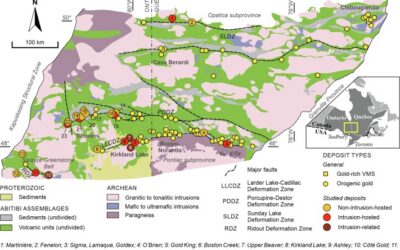
Mineral Exploration in the Abitibi Greenstone Belt: Geology, Deposit Types, and What to Expect in the Field
Image Source: https://www.sciencedirect.com/science/article/abs/pii/S016913682100247X The Abitibi Greenstone Belt produced more gold than almost any other Archean terrane on Earth, and the ground is still generating discovery-stage programs across northern Ontario and...
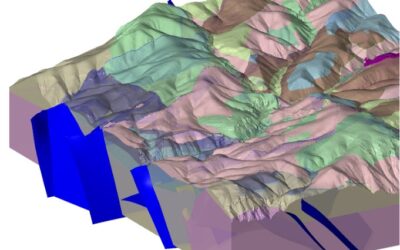
Beyond the Borehole: How 3D Geotechnical Modeling is De-Risking Modern Mine Design
The difference between a viable project and a costly oversight lies in the "digital twin" of the subsurface. Traditional 2D cross-sections, once the industry standard, are no longer sufficient for the complexities of modern resource extraction and the stringent safety...

Starting a Geology Career in Mining and Mineral Exploration
Graduating with a geology degree opens doors, but it can be hard to know which ones to walk through first. Many new graduates want work that's hands-on, technically meaningful, and connected to real projects, but translating that into an actual job search takes some...

Soil Sampling vs. Magnetic vs. Gravity Surveys in Canada’s Covered Terrain
Canada is home to some of the world’s most promising mineral districts, but many of those opportunities lie beneath cover rather than in clean, exposed outcrops. Across much of the country, exploration teams work in terrain shaped by glaciation, transported...

2026 Regulatory Shifts in Geophysics & Geotechnical Reporting in Canada
For Canadian junior and major exploration firms, the "Qualified Person" (QP) is under more scrutiny than ever. As we move into 2026, the integration of geophysical data into NI 43-101 technical reports has evolved from "supplemental" to "essential." In an era of...

How Geophysical Surveys Support Mineral Exploration in Canada’s Remote and Covered Terrains
Canada is one of the most mineral-rich countries in the world, but much of that potential lies in places that are difficult, expensive, or logistically complex to explore. From vast stretches of the Precambrian Shield to sediment-covered basins and northern regions...

Gravity Surveys in Mineral Exploration: How They Work, What They Reveal, and Why They Matter
In mineral exploration, every decision hinges on understanding what lies beneath the surface before drilling begins. Gravity surveys provide a precise, cost-effective way to map subsurface density variations and uncover geological structures that may host valuable...

Why Magnetic and Gravity Surveys Are Essential for Mineral Exploration in Canada
Canada is one of the most geophysically explored countries in the world. With vast mineral potential spread across the Precambrian Shield, structurally complex greenstone belts, sedimentary basins, and remote northern terrains, Canadian exploration has long relied on...