If you’re new to the mining or geology industries, you may have primarily heard of soil sampling for purposes related to engineering, construction, or even gardening. However, soil sampling is an important part of the mineral exploration and mining processes.
WHAT IS SOIL SAMPLING?
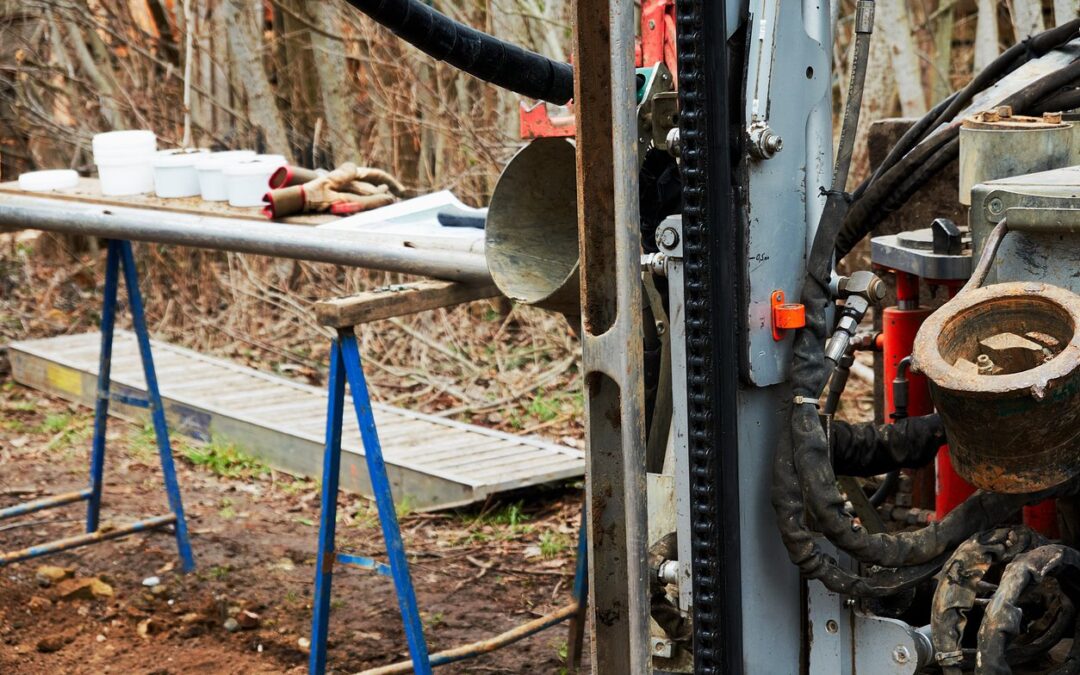
Soil sampling in mineral exploration is the process of taking soil samples from an area to determine the soil’s mineral makeup. In the mining industry, these soil samples are used to help determine whether there are sufficient concentrations of locatable minerals to justify continuing exploration.
HOW DOES SOIL SAMPLING AID IN MINERAL EXPLORATION?
As we know, mining is less about the soil itself and more about the bedrock underneath. How, then, is soil sampling relevant in mineral exploration?
During erosion and soil formation, trace elements present in bedrock become incorporated into the overlying residual soils. Typically, a high concentration of a certain mineral in bedrock will increase the concentration of geochemical values in the soil.
The distribution of the minerals in relation to an ore body depends on the geography of the area. For instance, sloping in the area will usually create fanning of mineral distribution down the slope. Seepage, or minerals being dispersed by groundwater, can also create anomalies that are farther away from an actual mineral deposit. This is why the proper mapping and labeling of soil samples—as well as consideration for surrounding geological features—are so important in the mineral exploration process.
Soil sampling is an early stage of mineral exploration, usually occurring before any significant drilling takes place. It is used intended to help inform drilling patterns as well as to increase confidence about a project’s potential viability.
SOIL SAMPLING SERVICES
While soil sampling seems like a relatively simple process, the interpretation of the data can vary greatly depending on the processes used to collect, label, and interpret data. It can be incredibly helpful to have an experienced geologist assist with soil sampling to ensure proper interpretation of information.
Many anomalies can skew soil samples, such as:
- Mechanical distortions/displacements (such as sub-outcrops being present on a slope)
- Transported soil such as gravel, sand, silt, clay, etc., that may be present over residual soil
- Windblown material
- Volcanic ash (uncommon)
Because of these anomalies and the interpretation of disbursement as occurs from general mineralization, it’s helpful to have someone who understands the progression of mineralized soil to help identify where ore bodies may occur.
ASK A QUESTION
Do you have a question about soil sampling in the mineral exploration process, or would you like to speak with an expert about soil sampling services? Reach out to Rangefront today.

ABOUT THE AUTHOR
BRIAN GOSS
President, Rangefront Mining Services
Brian Goss brings over 20 years of experience in gold and mineral exploration. He is the founder and President of Rangefront, a premier geological services and mining consulting company that caters to a large spectrum of clients in the mining and minerals exploration industries. Brian is also a director of Lithium Corp. (OTCQB: LTUM), an exploration stage company specializing in energy storage minerals and from 2014 to 2017, he fulfilled the role of President and Director of Graphite Corp. (OTCQB: GRPH), an exploration stage that specialized in the development of graphite properties. Prior to founding Rangefront, Brian worked as a staff geologist for Centerra Gold on the REN project, as well as various exploration and development projects in the Western United States and Michigan. Brian Goss holds a Bachelor of Science Degree with a major in Geology from Wayne State University in Michigan.
You may also be interested in...
Geophysical Surveys: Purposes & Cost
A geophysical survey is a non-invasive method of studying the subsurface properties of the Earth by measuring various physical properties, such as magnetic, seismic, and gravitational properties. These surveys are commonly conducted to gain insights into the...

Geophysical Surveys: Types of Surveys & Use Cases
Geophysical services refer to a branch of geological consulting that provides surveys and reporting to gather, interpret, and map geophysical data. These services are typically used for measuring, analyzing, and optimizing resources for mining or geology, and can also...

Mining & Mineral Exploration: Differences & Common Misconceptions
Mining and mineral exploration are a high-risk, high-reward process, requiring a high level of expertise, research, and—sometimes—a little luck. While many mineral exploration efforts never result in actual mining production operations, those that do can be highly...
Rangefront Mining Services Expands Local Field Crew Team to Washington State
Rangefront welcomes Daniel Reiss to the Rangefront team to head our new Washington state-based field crew, an expansion that will reduce already affordable costs for field crew services in the Northwest territories. July 2023 Elko, NV---Rangefront welcomes Daniel...

Geologists in the Mining Industry: Common Jobs & Career Outlook
Geology and the mining industry are naturally associated because of the expertise required to find and analyze potential deposits in bedrock. Because of that, many seeking a degree in geology will have their sights set on career opportunities in the mining industry,...
Common Challenges Mining Consultants Help Resolve
Utilizing a mining consultant during the mining and exploration process is an integral part of most operations’ strategies. As well as maximizing value and operational performance, a mining consultant can help shape strategy, drive innovation, and mitigate risks from...
5 Examples of Mineral Exploration
Mineral exploration is one of the first steps that takes place in a prospector’s journey from mineral discovery to active mining. This can be a long and resource-intensive process, but the payoffs can be significant. In mineral exploration, the goal is to investigate...
What Do Mining Consultants Do?
A successful mining project takes careful planning, expertise, and execution. With increasing focus on environmental regulations, corporate responsibility, political pressure, and more, engaging a mining consultant has become a practical solution to navigating the...

What to Look for in a Mining Recruiting Company
As the weather starts to warm, mining companies are beginning to recruit to fill seasonal contract needs. While some mining companies may use direct recruitment efforts, it’s more common for mining and exploration companies to use a recruiting service. WHAT TO LOOK...
Why Choose Rangefront for Your Mining Consulting Services
Rangefront provides a wide range of mining consulting services to help your project succeed. Whether you’re still in early exploration stages or looking to improve the output of your current project, the experts at Rangefront can help. WHY CHOOSE RANGEFRONT AS YOUR...
What are Mineral Reserves & Mineral Resources?
Mineral resources and mineral reserves are crucial data points in a mining company’s operations. In mining and exploration, the terms “Mineral Resource” and “Mineral Reserve” can be confusing—and are often used incorrectly or even interchangeably. Mineral resources...

Direct-Hire vs. Contract Labor: What are the Differences?
Rangefront offers both direct-hire and contract labor services, but what is the difference and how do you know which you need? THE DIFFERENCE BETWEEN CONTRACT LABOR AND DIRECT-HIRE IN MINING AND GEOLOGY When our clients tell us they need help with recruitment...