
Mining has long been an integral part of Canada’s economy, providing essential minerals and metals that fuel global industries—from construction and energy to technology and transportation. However, mining also presents environmental challenges, including habitat disruption, water contamination, and carbon emissions. In response, Canada has developed one of the world’s most robust frameworks for environmentally responsible mining.
For companies like Rangefront, aligning operational excellence with environmental stewardship is a core value. Through advanced geoscience, regulatory alignment, and sustainable methodologies, responsible mining becomes not only possible—but profitable and ethical.
This article explores the environmental regulations governing Canadian mining and outlines best practices that support sustainability while maintaining competitiveness in mineral exploration and mining.
Quick Links:
Canada’s Regulatory Framework for Environmental Protection
Key Environmental Considerations in Canadian Mining
Indigenous Engagement and Traditional Knowledge
How Rangefront Supports Environmental Best Practice
Canada’s Regulatory Framework for Environmental Protection
Canada’s mining industry operates under a layered system of federal, provincial, and territorial regulations designed to safeguard the environment. Key components of this framework include:
1. Impact Assessment Act (IAA)
At the federal level, the Impact Assessment Act (2019) ensures that major mining projects undergo comprehensive reviews to evaluate their potential environmental, health, social, and economic effects. Projects that meet criteria for significant impacts must undergo environmental assessments (EAs) led by the Impact Assessment Agency of Canada (IAAC).
The IAA promotes transparency, Indigenous consultation, and public participation while requiring developers to outline plans for:
- Mitigating environmental effects
- Long-term reclamation
- Monitoring and reporting performance indicators
2. Provincial and Territorial Oversight
While the federal government handles overarching environmental protection and Indigenous rights, provinces and territories retain jurisdiction over resource development. Each has tailored environmental regulations, mining acts, and permitting processes. For instance:
- British Columbia emphasizes cumulative environmental effects in its assessment processes.
- Ontario’s Mining Act requires rehabilitation plans and financial assurance.
- Quebec’s MERN demands thorough water management plans and biodiversity preservation strategies.
3. Environmental Management Systems (EMS)
Regulators increasingly require companies to develop Environmental Management Systems (EMS), which serve as structured frameworks for tracking, reducing, and reporting environmental impacts. These systems are typically aligned with ISO 14001 standards and facilitate continuous improvement in performance.
Key Environmental Considerations in Canadian Mining
To meet regulatory expectations and uphold environmental responsibility, mining operations must account for the following critical areas:
1. Land and Habitat Disturbance
Mining can lead to the displacement of wildlife and vegetation. Companies must conduct baseline ecological assessments and develop biodiversity management plans to avoid, minimize, or offset ecological damage.
Best practices include:
- Establishing buffer zones around critical habitats
- Scheduling work to avoid breeding or migratory seasons
- Conducting progressive reclamation during the life of the mine
2. Water Resource Management
Water is both a resource and a receptor in mining operations. From ore processing to dust suppression, water use must be carefully managed to avoid:
- Acid mine drainage (AMD)
- Metal leaching
- Contamination of nearby surface and groundwater
Best practices include:
- Constructing water treatment facilities on-site
- Recycling process water
- Implementing tailings management systems that isolate waste materials from water bodies
- Real-time water quality monitoring using IoT-enabled sensors
3. Air Quality and Emissions
Mining operations can generate dust, greenhouse gases (GHGs), and emissions from machinery and processing plants. Canada’s mining sector is expected to contribute to national GHG reduction targets under the Pan-Canadian Framework on Clean Growth and Climate Change.
Mitigation strategies include:
- Electrifying equipment and transitioning to renewable power
- Installing scrubbers and filters to reduce airborne particulates
- Measuring and reporting Scope 1, 2, and (where possible) Scope 3 emissions
- Carbon offsetting initiatives like reforestation or biochar application
4. Tailings and Waste Management
Tailings—residues left over after ore extraction—pose significant environmental risks if not handled properly. Catastrophic tailings dam failures in global contexts have prompted stricter oversight.
Canadian best practices include:
- Designing tailings storage facilities (TSFs) using downstream or centerline methods for stability
- Implementing dry-stack tailings technology where feasible
- Adopting the Global Industry Standard on Tailings Management (GISTM) to ensure transparency, accountability, and third-party audits
5. Closure and Reclamation Planning
Mine closure is not an afterthought—it begins at the project’s inception. Canadian law requires operators to submit detailed mine closure and reclamation plans backed by financial assurance to ensure that funds are available to restore the land.
Effective closure practices include:
- Backfilling open pits and underground workings
- Recontouring disturbed landscapes
- Replanting native vegetation
- Long-term water treatment and monitoring
Indigenous Engagement and Traditional Knowledge
An important key to environmental responsibility in Canadian mining is meaningful engagement with Indigenous communities. Environmental stewardship is deeply tied to Indigenous land rights and traditional knowledge.
Rangefront and other responsible companies recognize the value of incorporating Traditional Ecological Knowledge (TEK) into environmental assessments and project planning. Best practices include:
- Early, ongoing consultation with Indigenous nations
- Co-developing environmental monitoring programs
- Sharing data and involving Indigenous representatives in reclamation projects
This approach fosters trust, reduces conflict, and aligns with the United Nations Declaration on the Rights of Indigenous Peoples (UNDRIP), which Canada is in the process of implementing through legislation.
How Rangefront Supports Environmental Best Practices
As a trusted geological services provider, Rangefront integrates environmental responsibility into the core of its operations by:
1. Precision Exploration
By leveraging advanced geological mapping, remote sensing, and geophysical surveys, Rangefront helps reduce environmental impact from the outset. Targeted exploration avoids unnecessary disturbance and ensures resources are extracted with the least possible ecological footprint.
2. Sustainable Modeling and Forecasting
Using 3D geological models and predictive analytics, Rangefront enables clients to assess potential environmental risks early—before full-scale development. This leads to smarter mine planning and optimized land use.
3. Compliance-Ready Reporting
Rangefront’s technical reports are tailored to meet evolving provincial and federal regulatory requirements, ensuring that clients can secure permits with full environmental transparency.
4. Collaboration with Environmental Consultants
Rangefront often partners with environmental engineers and biologists to conduct joint assessments, monitoring programs, and closure strategies that meet or exceed legal standards.
Future Trends in Environmentally Responsible Mining
The path forward for Canadian mining will be shaped by several emerging trends:
- Decarbonization: Transitioning to low-carbon mining fleets, processing with clean energy, and achieving net-zero targets
- Circular economy models: Reducing primary extraction by promoting recycling and reprocessing of mining waste
- Blockchain-based transparency: Ensuring responsible sourcing and full traceability of minerals, especially for critical materials like lithium and rare earths
- AI and machine learning: Enabling real-time environmental monitoring, predictive risk analysis, and rapid adaptation
Companies that embrace these trends early—backed by precise geological insights and environmental intelligence—will not only comply with regulation but also lead the industry in innovation and reputation.
Final Thoughts
The environmental landscape of Canadian mining is evolving rapidly, driven by strong regulations, stakeholder expectations, and global sustainability goals. To thrive in this environment, mining companies must adopt proactive, science-based approaches to minimize ecological impact while ensuring long-term profitability.
For companies like Rangefront, environmental responsibility is more than a compliance checkbox—it is foundational to operational excellence. By supporting clients with advanced geological insights, environmentally sound planning, and regulatory alignment, Rangefront is playing a key role in shaping a more sustainable future for Canada’s mining sector.

ABOUT THE AUTHOR
BRIAN GOSS
President, Rangefront Mining Services
Brian Goss brings over 20 years of experience in gold and mineral exploration. He is the founder and President of Rangefront, a premier geological services and mining consulting company that caters to a large spectrum of clients in the mining and minerals exploration industries. Brian is also a director of Lithium Corp. (OTCQB: LTUM), an exploration stage company specializing in energy storage minerals and from 2014 to 2017, he fulfilled the role of President and Director of Graphite Corp. (OTCQB: GRPH), an exploration stage that specialized in the development of graphite properties. Prior to founding Rangefront, Brian worked as a staff geologist for Centerra Gold on the REN project, as well as various exploration and development projects in the Western United States and Michigan. Brian Goss holds a Bachelor of Science Degree with a major in Geology from Wayne State University in Michigan.
You may also be interested in...
5 Examples of Mineral Exploration
Mineral exploration is one of the first steps that takes place in a prospector’s journey from mineral discovery to active mining. This can be a long and resource-intensive process, but the payoffs can be significant. In mineral exploration, the goal is to investigate...
What Do Mining Consultants Do?
A successful mining project takes careful planning, expertise, and execution. With increasing focus on environmental regulations, corporate responsibility, political pressure, and more, engaging a mining consultant has become a practical solution to navigating the...
What to Look for in a Mining Recruiting Company
As the weather starts to warm, mining companies are beginning to recruit to fill seasonal contract needs. While some mining companies may use direct recruitment efforts, it’s more common for mining and exploration companies to use a recruiting service. WHAT TO LOOK...
Why Choose Rangefront for Your Mining Consulting Services
Rangefront provides a wide range of mining consulting services to help your project succeed. Whether you’re still in early exploration stages or looking to improve the output of your current project, the experts at Rangefront can help. WHY CHOOSE RANGEFRONT AS YOUR...
What are Mineral Reserves & Mineral Resources?
Mineral resources and mineral reserves are crucial data points in a mining company’s operations. In mining and exploration, the terms “Mineral Resource” and “Mineral Reserve” can be confusing—and are often used incorrectly or even interchangeably. Mineral resources...

Direct-Hire vs. Contract Labor: What are the Differences?
Rangefront offers both direct-hire and contract labor services, but what is the difference and how do you know which you need? THE DIFFERENCE BETWEEN CONTRACT LABOR AND DIRECT-HIRE IN MINING AND GEOLOGY When our clients tell us they need help with recruitment...
What to Know About Reference Materials in Mining Geology
If you are new to the metals industry; whether that be in exploration or production, you have probably come across or used a Certified Reference Material (CRM), also known as a “standard.” Standards are used in a wide variety of applications and for a variety of...

What is an NI 43-101 & What is it Used For?
An NI 43-101 report is a summary for potential investors of scientific and technical information for a mineral exploration, development, or production project. This report is required for listing on the Toronto Stock Exchange (TSX) and TSXV. Intended for the investing...

Steps in the Mining Consulting Process
For such an old industry, mining remains relatively enigmatic to new prospectors or early operations in today's economics. With complex geophysical and geochemical testing, ever-changing regulations and claims, reporting and processes, as well as the complications of...
FAQs About Mineral Exploration
As stated in our blog “8 Steps of Mineral Exploration,” mineral exploration is the process of seeking concentrated deposits of minerals for the purpose of mining these minerals for economic benefit. In this article, we discuss some of the frequently asked questions...
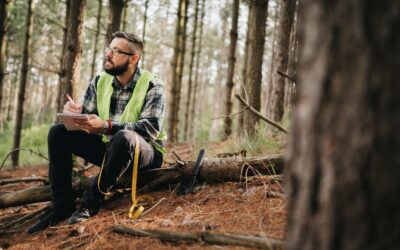
7 (More) Frequently Asked Questions About Claim Staking
Rangefront Mining Services has been in the mining industry for decades, which means we’ve seen more than our fair share of mining claims. In fact, each year we help our clients renew over 11,000 mining claims. Long story short, we have a lot of experience in claim...
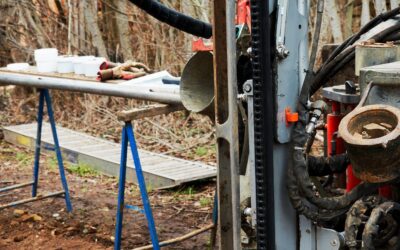
The Role of Soil Sampling in Mineral Exploration
If you’re new to the mining or geology industries, you may have primarily heard of soil sampling for purposes related to engineering, construction, or even gardening. However, soil sampling is an important part of the mineral exploration and mining processes. WHAT IS...