
For Canadian junior and major exploration firms, the “Qualified Person” (QP) is under more scrutiny than ever. As we move into 2026, the integration of geophysical data into NI 43-101 technical reports has evolved from “supplemental” to “essential.” In an era of high-stakes investment, Rangefront’s Canadian operations are bridging the gap between raw field data and investor-ready reporting, ensuring that resource estimates are backed by high-resolution subsurface imaging.
The Evolution of NI 43-101 Standards
in Canadian reporting standards emphasize geological confidence. It is no longer enough to report grade and tonnage; the QP must demonstrate a deep understanding of the structural controls of the deposit.
- Geophysical Constraints: Using Induced Polarization (IP) and Magnetics to define the “plumbing” of a mineral system.
- Reducing “Inferred” Risks: Strategic geophysics allows companies to move resources from “Inferred” to “Indicated” categories with fewer holes, saving millions in drilling costs while satisfying regulators.
Regional Focus
The Canadian landscape varies wildly, from the deep-seated greenstone belts of the Abitibi to the sedimentary basins of the Prairie provinces. Rangefront tailors its geophysical methods to the specific “signature” of the target.
- Abitibi Gold: High-resolution mag and IP to find the subtle shear zones.
- Critical Minerals (Ontario/Quebec):> Utilizing electromagnetic (EM) surveys to identify the conductive signatures of nickel and copper-rich sulfides.
he Role of Indigenous Partnerships
Modern exploration in Canada is inseparable from First Nations engagement. Technical transparency is a key pillar of this relationship. By utilizing non-invasive geophysics, Rangefront helps clients share “what’s under the ground” with community stakeholders without the visual and environmental impact of trenching. This builds “Social License” through data-sharing and respect for the land.
Reach Out
For more information about our geotechnical and geophysical services in Canada, please reach out.

ABOUT THE AUTHOR
BRIAN GOSS
President, Rangefront Mining Services
Brian Goss brings over 20 years of experience in gold and mineral exploration. He is the founder and President of Rangefront, a premier geological services and mining consulting company that caters to a large spectrum of clients in the mining and minerals exploration industries. Brian is also a director of Lithium Corp. (OTCQB: LTUM), an exploration stage company specializing in energy storage minerals and from 2014 to 2017, he fulfilled the role of President and Director of Graphite Corp. (OTCQB: GRPH), an exploration stage that specialized in the development of graphite properties. Prior to founding Rangefront, Brian worked as a staff geologist for Centerra Gold on the REN project, as well as various exploration and development projects in the Western United States and Michigan. Brian Goss holds a Bachelor of Science Degree with a major in Geology from Wayne State University in Michigan.
You may also be interested in...
What are Mineral Reserves & Mineral Resources?
Mineral resources and mineral reserves are crucial data points in a mining company’s operations. In mining and exploration, the terms “Mineral Resource” and “Mineral Reserve” can be confusing—and are often used incorrectly or even interchangeably. Mineral resources...

Direct-Hire vs. Contract Labor: What are the Differences?
Rangefront offers both direct-hire and contract labor services, but what is the difference and how do you know which you need? THE DIFFERENCE BETWEEN CONTRACT LABOR AND DIRECT-HIRE IN MINING AND GEOLOGY When our clients tell us they need help with recruitment...
What to Know About Reference Materials in Mining Geology
If you are new to the metals industry; whether that be in exploration or production, you have probably come across or used a Certified Reference Material (CRM), also known as a “standard.” Standards are used in a wide variety of applications and for a variety of...

What is an NI 43-101 & What is it Used For?
An NI 43-101 report is a summary for potential investors of scientific and technical information for a mineral exploration, development, or production project. This report is required for listing on the Toronto Stock Exchange (TSX) and TSXV. Intended for the investing...

Steps in the Mining Consulting Process
For such an old industry, mining remains relatively enigmatic to new prospectors or early operations in today's economics. With complex geophysical and geochemical testing, ever-changing regulations and claims, reporting and processes, as well as the complications of...
FAQs About Mineral Exploration
As stated in our blog “8 Steps of Mineral Exploration,” mineral exploration is the process of seeking concentrated deposits of minerals for the purpose of mining these minerals for economic benefit. In this article, we discuss some of the frequently asked questions...
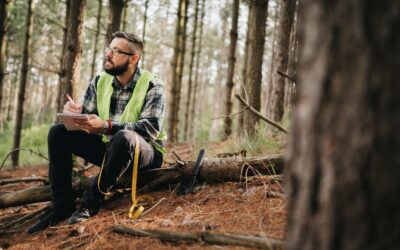
7 (More) Frequently Asked Questions About Claim Staking
Rangefront Mining Services has been in the mining industry for decades, which means we’ve seen more than our fair share of mining claims. In fact, each year we help our clients renew over 11,000 mining claims. Long story short, we have a lot of experience in claim...
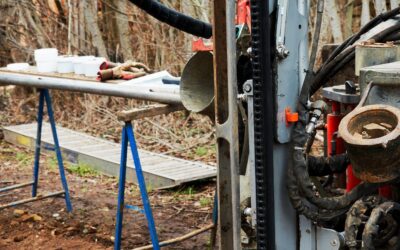
The Role of Soil Sampling in Mineral Exploration
If you’re new to the mining or geology industries, you may have primarily heard of soil sampling for purposes related to engineering, construction, or even gardening. However, soil sampling is an important part of the mineral exploration and mining processes. WHAT IS...
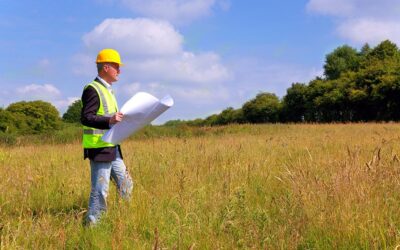
Common Land Staking Questions
Common Land Staking Questions Although the perception of prospecting and mining can sometimes be cartooned as “old-fashioned,” the reality is that land staking and mining are alive and well. While during the late 1800s, mining focused primarily on gold, mining...
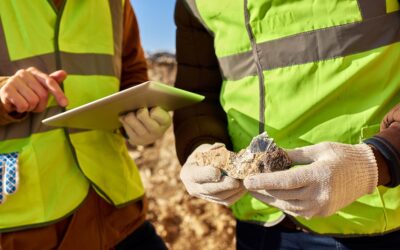
What is a Locatable Mineral?
A locatable mineral refers to mineral deposits that can be mined through the process of making a mining claim on public lands. One of the stipulations of filing a hardrock or placer mining claim is that the mineral deposits found in the area must be considered a...

Land Staking: What it Means & How it Works
Put away your flag; modern land staking looks nothing like it does in cartoons or historical motifs. Instead of a flag asserting instant ownership over a tract or parcel of land, modern land staking is more likely to refer to the asserted ownership over a land’s...
Why is a Feasibility Study Important in Mining?
During your prospecting projects, you may reach a certain point where you have the need to complete a feasibility study. If you’ve never been to this stage of the mineral exploration process before, you may be wondering what, exactly, a feasibility study is and why it...